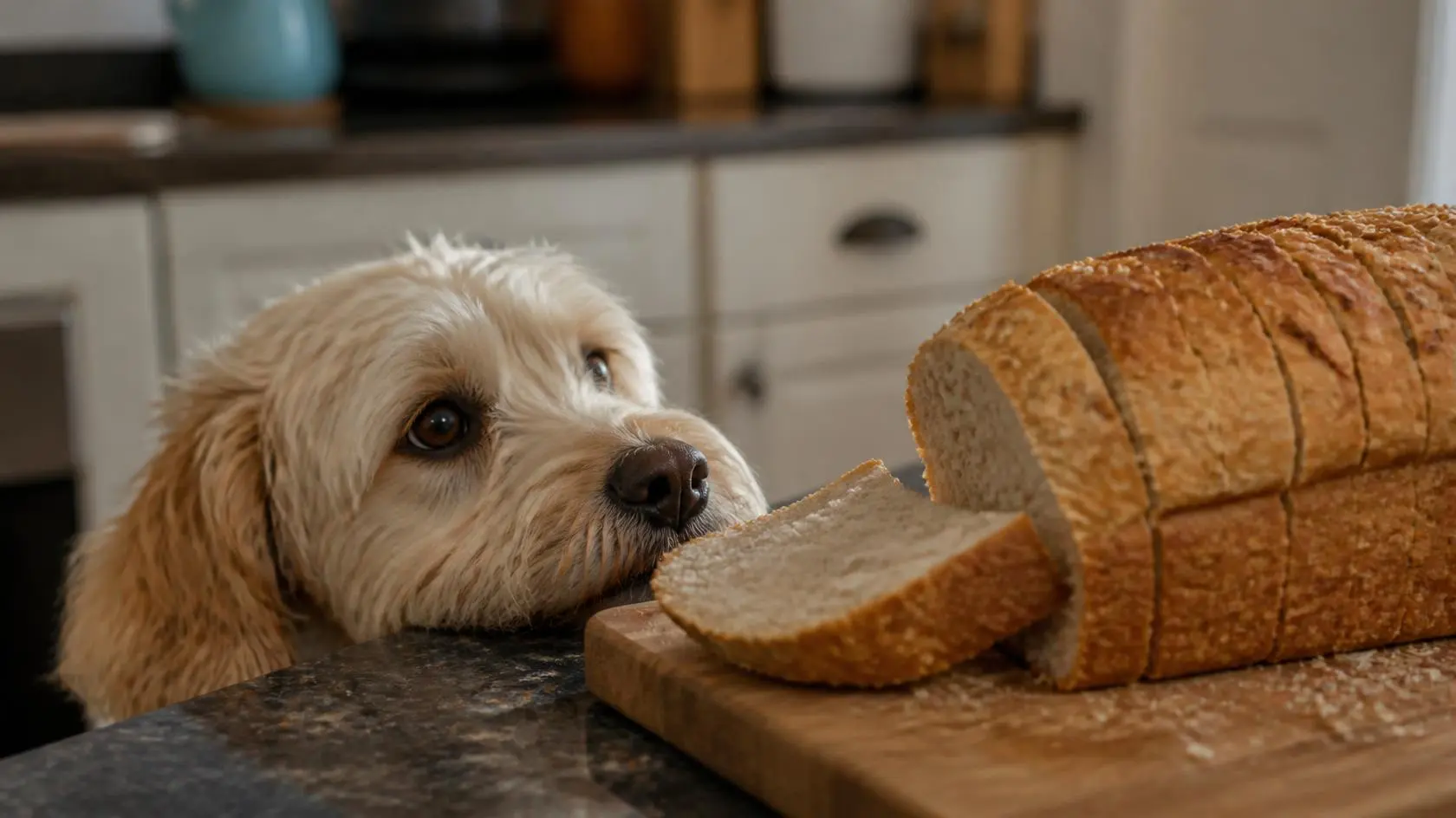
Plain bread isn't toxic to dogs and a small piece here and there generally won't cause harm — but it's worth understanding why it's not actually a good regular treat, and which bread-related ingredients are genuinely dangerous.
Why plain bread is "fine" but not great
Bread offers essentially no nutritional value for dogs and is high in carbohydrates with little else to offer — occasional small amounts are unlikely to cause harm in a healthy dog, but it shouldn't become a regular habit, especially for dogs managing weight or blood sugar.
The ingredients that actually matter
The real risk with bread usually isn't the bread itself, it's what's mixed into it:
- Raisins — some breads (like raisin bread) contain grapes/raisins, which are genuinely toxic — see our grapes and raisins guide for why this matters
- Xylitol — some sugar-free or specialty breads use this sweetener, which is dangerous for dogs — always check labels on anything marketed as "sugar-free" or "diet"
- Garlic and onion — garlic bread and some artisan loaves contain these, which are toxic in any amount over time
- Nuts — some specialty breads contain macadamia nuts or other nuts that can cause reactions
- Excess salt — some artisan/specialty breads are much higher in sodium than a basic loaf
Plain white or wheat sandwich bread, with none of the above, is the safest version if you're sharing any at all.
What about raw bread dough?
This one is a genuine emergency, unlike baked bread. Raw yeast dough continues to rise in the warm environment of a dog's stomach, which can cause a dangerous bloating/twisting condition, and the yeast fermentation process produces alcohol as a byproduct, which can cause alcohol toxicity. If your dog gets into raw dough, contact your vet immediately regardless of amount — this is not a "wait and see" situation.
Bottom line
A small piece of plain baked bread occasionally is unlikely to hurt a healthy dog, but it offers no real benefit either, so there's little reason to make it a habit. Always check ingredients on specialty breads specifically, and treat raw dough as an emergency, not a treat.