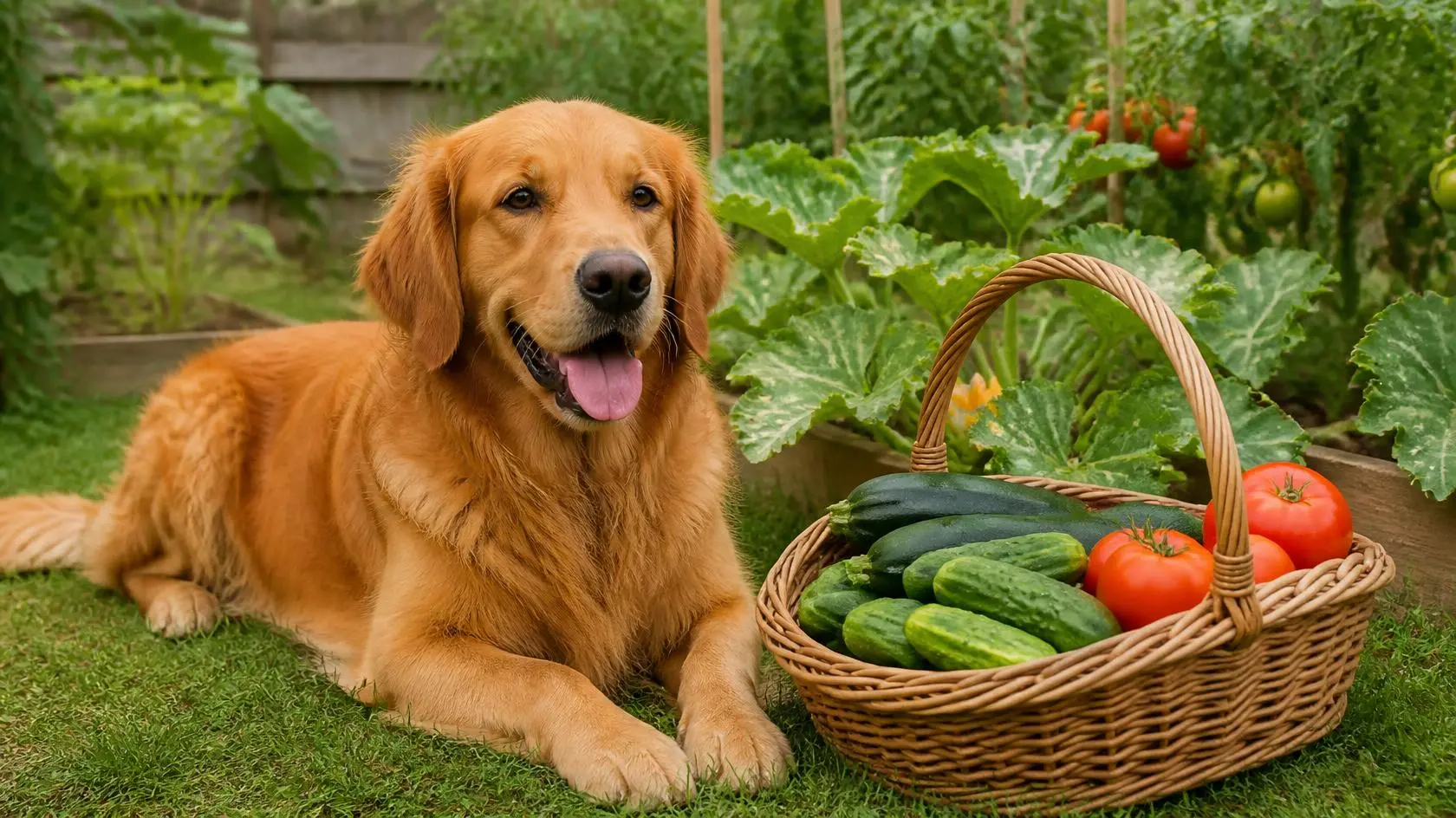
If your dog likes to investigate everything growing in the backyard, you may have wondered which vegetables are safe to share and which garden plants should stay completely out of reach. The good news is that several common garden vegetables can be safe for dogs when they are prepared plainly and offered in reasonable amounts.
Cucumbers, zucchini, and green beans are generally simple choices for most healthy dogs, while tomatoes require more care because the ripe fruit is different from the green parts of the tomato plant.
The safest general rule is simple: give your dog the edible vegetable, not the garden plant. Avoid vegetables prepared with butter, heavy oil, salt, sauces, onion, garlic, or other seasonings, and cut larger pieces into a size your dog can comfortably eat.
Garden vegetables dogs can and can't eat
Here is a quick safety guide to the vegetables covered in this article:
| Vegetable | Can dogs eat it? | Safest way to serve it | Important caution |
|---|---|---|---|
| Cucumber | Yes | Raw or plain, cut into manageable pieces | Large pieces can be a choking risk; wash before serving |
| Zucchini | Yes | Raw or cooked, plain | Avoid butter, oil, salt, garlic, onion, and heavy seasoning |
| Ripe tomato | Yes, in small amounts | Ripe red flesh only | Keep dogs away from stems, leaves, and unripe green tomatoes |
| Green beans | Yes | Fresh, cooked, or plain low-sodium canned | Avoid salty, seasoned, buttered, or sauced varieties |
| Unknown garden plant | Do not assume it is safe | Do not let your dog eat it until identified | Some garden plants can be toxic to dogs |
The simplest rule: give your dog the edible vegetable, not an unknown part of the plant. Wash garden produce, remove unsafe stems or leaves, avoid human-food seasonings, and introduce new vegetables in small amounts.
Can dogs eat cucumbers?
Yes, dogs can eat plain cucumber. Cucumber is mostly water and is relatively low in calories, making it a refreshing occasional treat for many dogs, particularly during warm weather.
You can offer cucumber raw or incorporate small pieces into your dog's regular food. There is generally no need to cook it first, although some dogs may find smaller or softer pieces easier to eat.
The main practical concern is size and shape. A whole cucumber or large chunks can be difficult for some dogs to chew properly. Slice or cut the cucumber into appropriately sized pieces, especially if you have a small dog or a dog that tends to swallow food quickly.
Can dogs eat cucumber skin and seeds?
In general, dogs can eat cucumber with the skin and seeds still attached. However, washing the cucumber first is important, particularly if it has been grown in a garden where it may have come into contact with soil, fertilizers, pesticides, or other substances.
If your dog has a sensitive stomach, peeling the cucumber and removing some of the seeds may make it easier to digest, although this is not necessary for most dogs.
Can dogs eat zucchini?
Yes, plain zucchini is generally safe for dogs. Dogs can eat zucchini raw or cooked, provided it is served without ingredients that may be harmful or unnecessarily rich.
Raw zucchini can be cut into small pieces and offered as an occasional snack. Cooked zucchini can also be mixed into a dog's regular food, provided it has been prepared without butter, excessive oil, salt, garlic, onion, or heavy seasoning.
Steamed or lightly cooked plain zucchini is an easy option if your dog prefers softer food.
Can dogs eat zucchini from the garden?
Yes, home-grown zucchini can be given to dogs, but wash it thoroughly before serving. Avoid giving your dog zucchini that has been treated with garden chemicals unless you know the product is safe for use around pets and the required waiting period has been followed.
It is also better to give your dog the zucchini itself rather than allowing them to chew on unknown garden plants, stems, leaves, or other parts of the vegetable plant.
Can dogs eat tomatoes?
Dogs can eat small amounts of ripe, red tomato flesh. Tomatoes are different from some other garden vegetables because the safety question depends on which part of the plant your dog eats and how ripe it is.
Fully ripe red tomato flesh is generally considered the safer part to offer. However, green, unripe tomatoes and the stems and leaves of the tomato plant contain higher levels of compounds such as tomatine, which can cause problems if a dog consumes enough of the plant material.
For that reason, if you grow tomatoes in your backyard, it is better not to let your dog freely chew on the plants. If you want to share tomato, use a small amount of ripe tomato flesh and remove the stem and leaves.
What happens if a dog eats a green tomato?
The potential risk depends on the amount eaten, the dog's size, and how much unripe plant material was consumed. A small accidental bite does not automatically mean that serious poisoning will occur, but larger amounts of green tomato or tomato plant material can cause digestive and other symptoms.
Watch for signs such as vomiting, diarrhea, excessive drooling, weakness, loss of coordination, or unusual behavior. If your dog has eaten a substantial amount of a tomato plant or shows concerning symptoms, contact your veterinarian promptly.
Can dogs eat tomato sauce?
It is better not to give dogs ordinary tomato sauce unless you have checked all of the ingredients. Many sauces contain onion, garlic, excessive salt, sugar, or other seasonings that make them unsuitable for dogs.
Plain ripe tomato is a much simpler choice if you want to give your dog a small amount.
Can dogs eat green beans?
Yes, plain green beans are generally safe for dogs. Fresh, cooked, or plain frozen green beans can be offered as an occasional treat, provided they are prepared without ingredients that are unsafe or unnecessarily rich.
Green beans are relatively low in calories, which is one reason some owners use small amounts as a treat for dogs that need to be careful about calorie intake. However, they should complement a complete and balanced diet rather than replace nutritionally complete dog food without veterinary guidance.
Can dogs eat canned green beans?
Plain canned green beans can be suitable, but check the label carefully. Many canned vegetables contain added sodium.
If possible, choose no-salt-added or low-sodium plain green beans. You can also drain and rinse canned green beans before offering a small amount.
Avoid green beans prepared with sauces, butter, garlic, onion, bacon, or heavy seasoning.
Can dogs eat raw garden vegetables?
Some vegetables can be eaten raw, while others may be easier for dogs to digest when cooked. For the vegetables covered here, cucumber, zucchini, and green beans can generally be offered in appropriate forms when prepared plainly.
Cooking is not what makes every vegetable safe, though. The more important questions are which vegetable it is, which part of the plant your dog ate, how it was prepared, and how much your dog consumed.
For example, plain cucumber is a very different situation from a dog chewing on an unidentified garden plant. Likewise, ripe tomato flesh is different from the leaves and stems of a tomato plant.
How much garden vegetables can dogs eat?
There is no universal serving size that applies to every dog. A 10-pound dog and a 90-pound dog have very different nutritional and calorie requirements.
If you are introducing a vegetable for the first time, start with a small portion. This gives you an opportunity to see how your dog responds before offering more.
Even vegetables that are considered safe can cause digestive upset if a dog suddenly eats a large amount. Too much fiber or a sudden change in diet can lead to gas, loose stools, vomiting, or other stomach problems.
Vegetables should also remain an addition to your dog's normal diet rather than becoming a replacement for a complete and balanced food unless your veterinarian has specifically recommended a different feeding plan.
What vegetables should dogs not eat from the garden?
A backyard garden should not automatically be considered a dog-safe area. The fact that a plant produces an edible vegetable does not mean that every part of the plant is safe for dogs.
Some plants contain naturally occurring compounds that can be harmful, while others may become dangerous because of pesticides, herbicides, fertilizers, or other garden products.
That is why it is useful to identify every plant growing in an area your dog can access rather than assuming that all vegetables are safe.
If you are unsure about a particular plant, vegetable, leaf, flower, or garden product your dog has eaten, contact your veterinarian or a reputable pet poison resource for specific guidance.
Are vegetables from a backyard garden safe for dogs?
Home-grown vegetables can be perfectly reasonable treats for dogs, but they should still be washed and prepared appropriately.
Before giving your dog vegetables from the garden:
- Wash the produce thoroughly to remove dirt and potential contaminants.
- Know which plant you are feeding. Do not let your dog eat unidentified plants.
- Separate the edible portion from stems, leaves, and other plant material when those parts are not considered safe.
- Consider garden chemicals. Fertilizers, pesticides, herbicides, slug treatments, and other products can create risks independent of the vegetable itself.
- Serve vegetables plain. Avoid butter, heavy oil, salt, sauces, onion, garlic, and human-food seasonings.
- Cut food into manageable pieces appropriate for your dog's size and eating habits.
Can dogs eat vegetables straight from the garden?
It is better not to let your dog freely harvest vegetables from the garden, even when the vegetable itself is considered dog-safe.
A dog wandering through a vegetable patch may eat an excessive amount, chew on leaves or stems, consume an unfamiliar plant, or ingest soil and garden chemicals along with the vegetable.
Instead, harvest the vegetable yourself, wash it, prepare the appropriate edible portion, and give your dog a controlled amount.
What if my dog ate a garden plant?
If your dog ate a plant you cannot identify, do not assume that it is safe simply because it was growing alongside vegetables.
Try to identify the plant and determine which part your dog consumed and approximately how much. If you know the plant may be toxic, or your dog develops symptoms such as vomiting, diarrhea, excessive drooling, weakness, tremors, difficulty breathing, or unusual behavior, contact a veterinarian promptly.
For a suspected poisoning, avoid relying on internet lists alone. The appropriate response can depend on the specific plant, the amount consumed, and the dog's size and health.
Simple garden vegetables dogs can eat
For the vegetables covered in this guide, the basic rules are straightforward:
- Cucumber: generally safe when plain and cut into manageable pieces.
- Zucchini: generally safe raw or cooked when plain.
- Ripe tomato: small amounts of ripe flesh are generally acceptable, but keep dogs away from the plant and unripe green tomatoes.
- Green beans: generally safe when plain; choose fresh or low-sodium canned varieties.
These vegetables can be useful as occasional treats, but they do not need to become a major part of your dog's diet. Your dog's primary nutrition should still come from a complete and balanced food appropriate for their life stage.
Garden vegetable safety for dogs: the bottom line
Yes, dogs can eat several common garden vegetables. Plain cucumber, zucchini, and green beans are generally simple choices, while ripe tomato flesh can also be offered in small amounts with more care.
The biggest mistake is assuming that because the vegetable is edible for humans, every part of the plant is automatically safe for dogs. Tomatoes are a good example: ripe red flesh is different from the leaves, stems, and unripe green fruit.
Keep your dog's access to the garden controlled, identify the plants you grow, keep garden chemicals out of reach, and serve vegetables washed, plain, and in appropriately sized portions.
And if you're looking for other fresh foods that can work as occasional warm-weather treats, our guide to whether dogs can eat watermelon covers serving size, preparation, seeds, rind, and what to watch for.