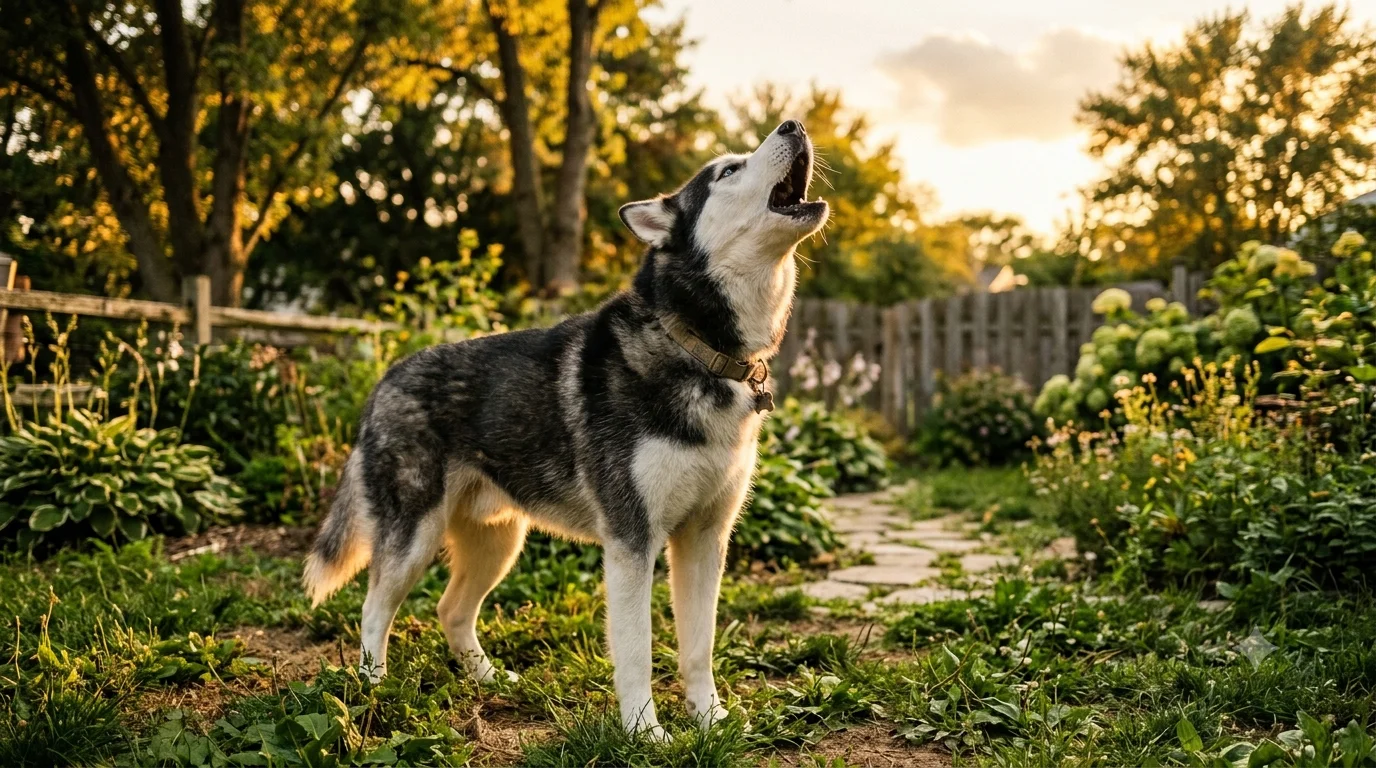
Howling taps into one of the oldest forms of canine communication — long-distance signaling that predates domestication entirely. Some dogs rarely make a sound; others answer every siren on the street. The specific trigger usually explains the specific howl.
Why do dogs howl?
In wolves, howling serves as long-distance communication — announcing location, calling the group together, or signaling territory. Domestic dogs retain this instinct to varying degrees, and it shows up as a response to sounds, a social/communicative behavior, an attention-seeking habit, or occasionally a sign of distress. There isn't one single universal meaning behind every howl — the trigger and context are what actually tell you what's going on.
Why does my dog howl when I howl?
This is one of the most common versions of this question, and it's a genuinely social response rather than your dog mistaking you for another dog. Howling back at a howl (yours, another dog's, or a similar-pitched sound) is a communicative reflex — an instinctive "answering" behavior — and for some dogs it becomes a learned, almost game-like exchange once they realize it gets a reaction from you. Individual dogs vary a lot here: some howl back reliably every time, others rarely engage at all.
What sounds make dogs howl?
Sirens, certain musical tones, other dogs howling, and various high-pitched sustained sounds are the most common triggers. The leading explanation is that these sounds resemble another dog or wolf howling in the distance, prompting an instinctive "answer." This is also why some dogs howl at specific human vocal pitches but not others — it's about the sound's resemblance to a howl, not a general reaction to noise.
Why does my dog howl at night?
Nighttime howling doesn't have one automatic explanation — it depends heavily on your dog's age, routine, and environment. It could be a response to nighttime sounds (sirens, wildlife, neighborhood activity) that are simply more noticeable when things are otherwise quiet, a learned attention-seeking pattern, or, in some cases, something worth paying closer attention to if it's new and paired with other changes (more on that below). It's not automatically separation anxiety or automatically a problem — context matters.
Why does my dog howl when I leave?
Howling that specifically starts when you leave, or escalates the longer you're gone, is a different pattern from sound-triggered or social howling — it's often tied to separation-related distress rather than communication instinct. If this sounds like your dog, our separation anxiety guide covers the underlying causes and training approaches in more depth.
Why do some dogs howl more than others?
Breed tendency plays a real role — Huskies and other northern/sled-type breeds are especially well known for frequent howling, and Beagles (bred originally for vocal hunting communication) also tend to howl more readily than many other breeds. But this is a tendency, not a rule — individual personality, environment, and learned habits matter just as much as breed. A dog that "doesn't howl" isn't unusual or lacking something; some dogs simply express themselves through barking, whining, or body language instead.
Can all dogs howl?
Physiologically, yes — howling is part of the vocal range available to essentially all dogs, inherited from their wolf ancestry. Whether an individual dog actually does it often, rarely, or almost never is a different question, shaped by breed tendency, personality, and what triggers they've been exposed to. A dog that's never howled likely still can — they just haven't encountered a strong enough trigger, or don't express themselves that way.
How to get your dog to howl
If you're hoping to hear your dog howl (rather than trying to reduce the behavior), a few humane approaches tend to work better than forcing it:
- Notice their existing triggers first — does your dog already respond to a specific siren, song, or sound? That's your starting point, not a random new noise
- Try a gentle, sustained vocal cue — a soft, held "awooo" sound, similar in pitch to a howl, is more likely to prompt a response than a normal-pitched word or command
- Reinforce it when it happens naturally — calm praise or a small reward right after a spontaneous howl can help your dog associate the behavior with a positive response
- Be consistent — using the same cue repeatedly, rather than a different sound each time, helps some dogs build the association faster
Not every dog can be reliably trained to howl on command — some are simply less vocally inclined regardless of the approach, and that's a normal individual difference, not a training failure. Avoid anything that startles, stresses, or distresses your dog just to provoke a reaction — a reluctant howl isn't worth an anxious dog.
Should I be concerned if my dog howls?
Most howling is completely normal communication and not something to eliminate or worry about. It's worth paying closer attention when the pattern changes meaningfully: a sudden increase in howling with no clear trigger, howling paired with signs of distress or discomfort, or a shift in an older dog's vocal behavior alongside other changes (confusion, disrupted sleep patterns, altered appetite). Howling can sometimes occur alongside anxiety or discomfort, particularly when it's a new pattern rather than a lifelong habit — but a single explanation doesn't fit every case, and a vet or trainer is better positioned to assess an unusual change than guessing from a general description.