Coprophagia — the clinical term for eating feces — is one of the more common behaviors vets get asked about, and one of the most misunderstood. It ranges from a normal puppy phase to a persistent adult habit to, occasionally, a signal worth a vet's attention. The right response depends a lot on which of those situations you're actually in.
Why does my dog eat poop?
There's rarely one single explanation. Behavioral, environmental, developmental, and occasionally medical factors can all play a role, and poop eating doesn't automatically mean your dog is sick or that you're doing something wrong as an owner. The most useful next step isn't finding "the" cause — it's figuring out which category fits your specific situation: a puppy exploring the world, an adult dog with a learned habit, or a sudden new behavior in an older dog.
Why do puppies eat poop?
Puppies commonly explore the world with their mouths, and mother dogs naturally eat their puppies' waste to keep the den clean — some puppies pick up the behavior through this early exposure, then continue it out of habit or curiosity rather than any deficiency. This is typically a developmental phase that fades with consistent supervision and training, not a sign that something is nutritionally wrong. Prompt cleanup during this stage (removing the opportunity before the habit sets in) tends to matter more than anything else you can do.
Why does my dog eat its own poop?
In adult dogs, eating their own stool is often tied to one of a few things: a self-soothing or anxiety-linked habit, boredom, attention-seeking (especially if a strong reaction from you reliably follows), or — less commonly — an underlying medical factor. If this seems connected to broader anxiety, our separation anxiety guide and clingy behavior guide may be worth reading alongside this one.
Why does my dog eat cat poop?
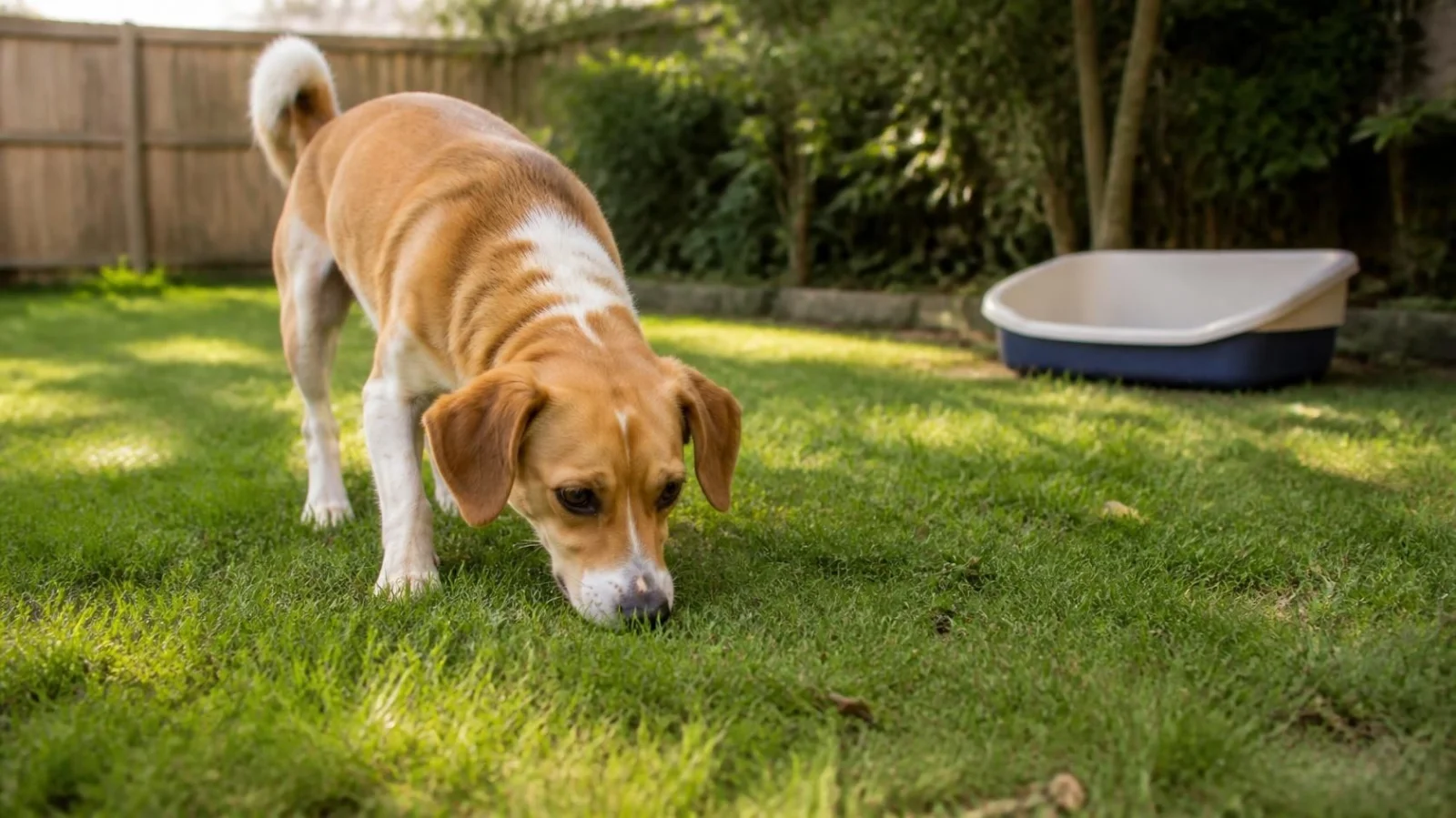
This is one of the most common versions of this question, and it has a fairly straightforward explanation: cat feces tends to be higher in protein and fat residue than dog waste (since cat food itself is more protein-dense), which can make it genuinely more appealing to dogs than their own or another dog's stool. Combine that with litter boxes often being easily accessible, and you've got a very common, very fixable situation.
How to stop a dog from eating cat poop
- Make the litter box physically inaccessible to your dog — a covered box, a box placed on a surface too high for your dog to reach, or a baby gate/cat door setup that a cat can pass through but a dog can't
- Scoop more frequently — less opportunity means less habit reinforcement
- Supervise multi-pet spaces during the adjustment period while you set up better access control
This is almost always a manageable access issue rather than a sign of anything wrong with either pet.
What about rabbit, chicken, or other animal poop?
Dogs eating waste from rabbits, chickens, deer, or other dogs is common, especially for dogs with outdoor access or who encounter wildlife on walks. The realistic concern here isn't that the poop itself is inherently dangerous — it's that any animal feces can occasionally carry parasites or pathogens (like giardia or intestinal worms) depending on the source animal's own health and environment. Occasional exposure in a healthy dog is usually not a major concern; supervising outdoor time and discouraging the behavior with training (covered below) is the practical approach, rather than assuming the worst after a single instance.
Why is my old dog suddenly eating poop?
A sudden behavior change in an adult or senior dog — especially one who's never done this before — is worth treating differently than a lifelong habit. It doesn't automatically mean something is wrong, but sudden onset is exactly the kind of change worth mentioning to your vet, particularly if it's paired with any other shift: appetite changes, weight loss, increased thirst, or changes in energy. A vet visit here is about ruling things out, not assuming the worst.
Can eating poop make my dog sick?
Occasional poop eating in an otherwise healthy dog usually doesn't cause problems. The realistic risks scale with frequency and source: repeated exposure, or waste from an animal with an unknown health/parasite status, carries a higher chance of exposure to parasites (giardia, worms) or bacteria. This is a good reason to discourage the behavior consistently, without needing to treat every single instance as an emergency.
My dog ate poop and is throwing up
A single episode of vomiting shortly after eating something unusual, in a dog who's otherwise acting normal, often resolves on its own — but it's worth monitoring closely rather than ignoring. Contact your vet if vomiting repeats, if your dog seems lethargic or uncomfortable, or if it's paired with diarrhea or appetite loss. Don't attempt to induce vomiting or give home remedies on your own — if you're genuinely concerned, a vet or poison control call is the right move, not a DIY treatment. We cover vomiting patterns in more depth in our vomiting guide if that's useful context.
Does pineapple actually stop dogs from eating poop?
This is a popular home remedy — the idea being that pineapple (or other additives) makes stool taste unpleasant enough to deter the behavior. It's worth knowing this isn't a well-established, reliably effective solution; anecdotal reports vary a lot, and it isn't a substitute for the behavioral and environmental strategies below. If you want to try it, it's unlikely to cause harm in small amounts, but don't expect it to be a fix on its own.
How to stop a dog from eating poop
- Prompt cleanup — removing the opportunity in your yard is often the single most effective step
- Positive reinforcement training — teaching and rewarding a solid "leave it" cue works better long-term than punishment
- Supervise outdoor time, especially during walks where wildlife waste is accessible
- Manage litter box or multi-pet access as described above if cat poop is the specific draw
- Ensure adequate exercise and mental stimulation — boredom-driven versions of this behavior often improve once a dog has more to do
- Review diet quality with your vet if a nutritional cause seems plausible, rather than assuming it and adding unproven supplements on your own
Avoid punishment, yelling, or rubbing your dog's nose in it — these don't address the underlying cause and can increase anxiety-driven versions of the behavior instead of resolving it. There's no single trick that eliminates this permanently for every dog; consistency across these strategies is what actually moves the needle over time.
When should you contact a veterinarian?
- The behavior starts suddenly in an adult or senior dog with no clear trigger
- It's persistent or seems compulsive despite consistent management
- Vomiting, diarrhea, weight loss, or reduced appetite are also present
- You suspect parasite exposure (worms visible in stool, known contact with an infected animal)
- Any other notable change in behavior, thirst, or energy shows up alongside it