Why Do My Dog’s Paws Smell Like Fritos or Corn Chips?
If your dog’s paws smell faintly like corn chips, popcorn, or even a bag of Fritos when you get close enough, you are not imagining it. It is one of those oddly specific dog smells that many owners notice sooner or later.
The good news is that a mild, familiar corn-chip smell is usually not a sign that your dog is dirty or sick. Healthy dogs naturally have bacteria and fungi living on their skin, and some of those microorganisms can produce the characteristic odor people describe as “Frito feet.”
But there is an important distinction between a dog's normal paw odor and a paw that has developed a new, unusually strong smell along with itching, redness, swelling, discharge, or pain.
So the real question is not simply, “Why do my dog's feet smell like Fritos?” It is:
“Is this just my dog's normal paw smell, or has something changed?”
Is the Frito smell on a dog's paws normal?
Often, yes.
A dog's skin is home to a complex community of microorganisms. Certain bacteria, including Pseudomonas and Proteus, can contribute to the distinctive odor that people compare to corn chips. The smell does not automatically mean your dog has a bacterial infection.
Veterinary experts interviewed by the American Kennel Club describe the mild Frito-like odor as a normal occurrence in many dogs. The important thing is to look at the whole picture rather than treating the smell by itself.
Your dog's paws are also exposed to considerably more environmental material than most other parts of the body. Walking, running, digging, wet grass, mud, dust, and other debris can all affect what the paws smell like.
Warmth and moisture can make the odor more noticeable because microorganisms thrive more readily in warm, damp areas. This is one reason some owners notice stronger paw odor during hot, humid weather or after a rainy walk.
What actually causes the corn-chip smell?
There isn't one single substance responsible for every dog's paw odor. Instead, the smell comes from the interaction between the dog's normal skin microbiome and the environment around the paws.
1. Naturally occurring bacteria
Dogs normally carry bacteria on their skin. Some species can produce compounds that have a distinctive yeasty, corn-chip-like odor.
Pseudomonas and Proteus are two bacterial groups commonly associated with the characteristic smell. Their presence alone does not prove that an infection is present.
2. Yeast can contribute to paw odor
Yeast is another normal inhabitant of canine skin. The problem occurs when yeast or other microorganisms multiply excessively and the skin becomes inflamed.
Dogs with allergies, chronic skin irritation, or consistently moist paws can be more susceptible to yeast overgrowth. A yeast-related problem is much more likely when odor is accompanied by signs such as itching, redness, greasy skin, hair loss, or persistent licking.
3. Moisture gets trapped between the toes
The spaces between a dog's toes can stay surprisingly warm and damp, particularly in dogs with furry feet, closely spaced toes, or paws that frequently get wet.
After swimming, bathing, walking through wet grass, or being outside in rainy weather, moisture can remain between the toes. That does not automatically cause an infection, but persistent moisture can make the environment more favorable for microbial overgrowth.
4. Your dog's paws collect environmental debris
Your dog's paws are essentially making contact with the ground all day. Dirt, grass particles, mud, dust, and other material can become trapped around the pads and between the toes.
This can change the way the paws smell even when the skin itself is completely healthy.
When is a Frito smell considered normal?
A mild corn-chip smell is generally less concerning when:
- The smell has been present for a long time and has not suddenly changed
- Your dog is not excessively licking or chewing the paws
- The skin looks normal when you separate the toes
- There is no swelling or obvious redness
- There are no sores, cracks, bleeding, or discharge
- Your dog is walking normally
- Your dog otherwise seems comfortable and behaves normally
In that situation, there may be nothing that needs to be “fixed.” The goal is simply sensible paw hygiene rather than trying to make your dog's paws completely odorless.
When does the smell mean something may be wrong?
The smell itself is less important than a change in smell or the appearance of other symptoms.
Pay closer attention if the odor suddenly becomes much stronger, unpleasant, sour, musty, or otherwise different from your dog's usual paw smell.
Also look for:
- Persistent licking or chewing: especially if your dog repeatedly focuses on the same paw
- Redness: between the toes, around the nails, or on the paw pads
- Swelling: particularly between the toes
- Hair loss: around the affected area
- Brown or reddish staining: around the paw from saliva or chronic irritation
- Crusts, sores, cracks, or ulcers
- Discharge or pus
- Lumps or bumps between the toes
- Limping or reluctance to put weight on the paw
- Signs of pain when you touch the foot
These symptoms can occur with several different paw problems, including allergies, bacterial or yeast infections, irritation, foreign bodies, parasites, and other forms of inflammation. Veterinary sources use the term pododermatitis broadly for inflammation of the paw and emphasize that there can be many underlying causes.
Why does my dog keep licking paws that smell like Fritos?
This is where the distinction between a normal smell and a potential problem becomes particularly useful.
Occasional paw licking is normal grooming behavior. But repeated licking, chewing, or gnawing at the paws can indicate that something is irritating or itching the skin.
Allergies are one common reason dogs develop itchy feet. Environmental allergens such as pollen, grasses, and other substances can trigger inflammation, while food allergies or sensitivities may also be involved in some dogs.
The licking itself can then make the situation worse. Saliva adds moisture, repeated licking damages the skin barrier, and the resulting inflammation can create conditions in which secondary yeast or bacterial infections develop.
That creates a frustrating cycle:
itchiness → licking → irritated skin → more moisture and inflammation → microbial overgrowth → more itching
So if your dog's paws smell like corn chips and your dog cannot seem to leave them alone, don't assume the smell itself is the problem. The underlying reason for the licking may be more important.
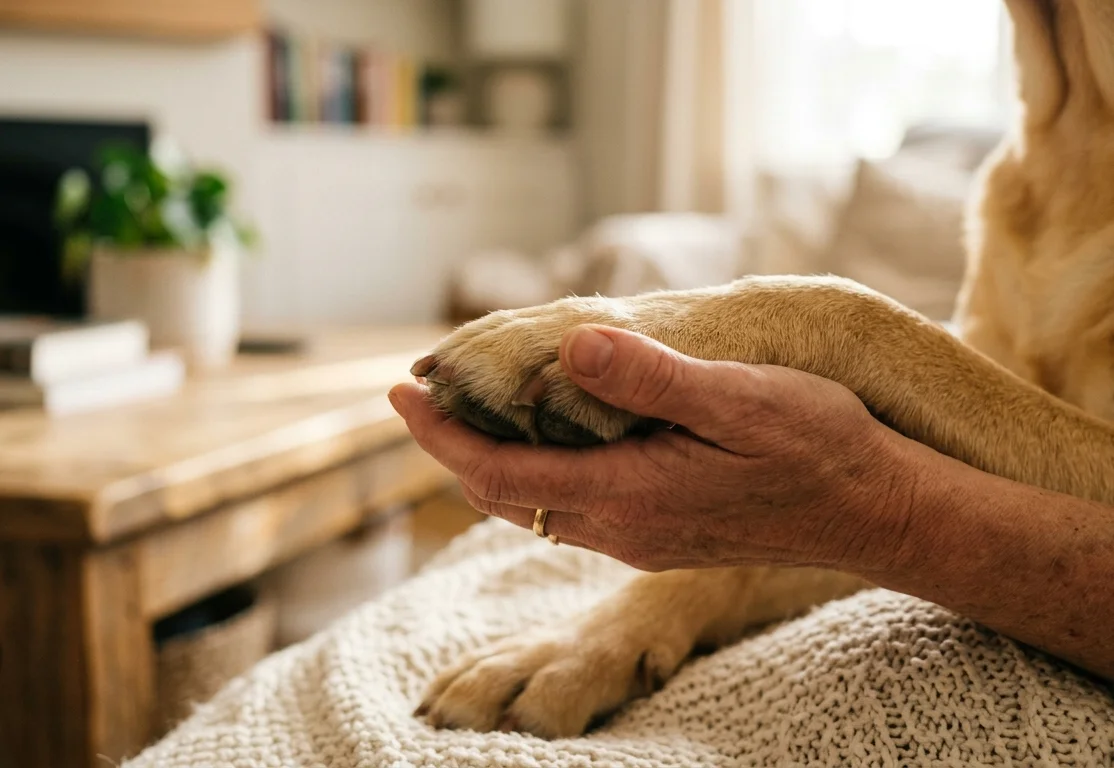
How to check your dog's paws at home
You don't need special equipment to perform a simple paw check. In fact, regularly examining your dog's feet can help you notice changes before they become obvious problems.
Step 1: Look at the top of the paw
Check for redness, swelling, hair loss, wounds, or anything stuck in the fur.
Step 2: Separate the toes
This is one of the most commonly overlooked areas. Gently spread the toes and look between them for redness, moisture, debris, swelling, lumps, or discharge.
Step 3: Examine the pads
Look for cracks, cuts, burns, excessive thickening, bleeding, or foreign material stuck to the pads.
Step 4: Check the nails
Look for broken nails, inflammation around the nail beds, unusual discharge, or changes in color.
Step 5: Compare all four paws
Don't just inspect the paw that smells strongest. Comparing the paws can help you notice whether one foot looks significantly different from the others.
If your dog normally has a mild corn-chip smell on all four feet but suddenly develops a swollen, red, painful area on one paw, that is a very different situation.
Should you wash your dog's paws to get rid of the smell?
Not necessarily.
If your dog simply has a mild, normal Frito-like smell and the paws look healthy, repeatedly washing them just to eliminate the odor may be unnecessary.
Over-cleaning can irritate sensitive skin, and heavily scented products are not a good substitute for identifying why an abnormal odor has developed.
For routine cleaning after a muddy or dirty walk, gently wiping the paws with a dog-safe, fragrance-free product or damp cloth can be sufficient. If you wash the paws, rinse away any product residue and dry the paws thoroughly, including between the toes.
The American Kennel Club also advises against trying to mask normal paw odor with perfumes or heavily scented products. Dogs have a highly sensitive sense of smell, and masking an odor does not address an underlying skin problem if one exists.
What about trimming the hair between the paw pads?
There is no universal rule that every dog needs the hair between its paw pads removed.
For dogs with very furry feet, keeping excessive hair neatly groomed can make it easier to inspect the paws and may reduce the amount of mud and debris that gets trapped there.
However, aggressive trimming or shaving close to the skin can cause irritation or accidental cuts. If you're unsure how much hair should be removed, a professional groomer or veterinarian can show you what is appropriate for your dog's coat and feet.
Can allergies cause smelly paws?
Yes, but the smell itself does not diagnose an allergy.
Dogs with allergies commonly develop itchy paws, and repeated licking can lead to inflammation and secondary yeast or bacterial overgrowth. Paw problems associated with allergies may therefore include both itching and odor.
Other clues can include recurring ear problems, itching elsewhere on the body, seasonal flare-ups, or persistent skin irritation.
If your dog's paw problems keep returning despite cleaning, it is worth discussing the pattern with your veterinarian rather than repeatedly treating the odor itself. Identifying and controlling the underlying trigger is important when pododermatitis becomes recurrent.
What will a veterinarian do if the paws look infected?
If your veterinarian suspects that your dog has more than normal paw odor, the next step is usually to determine what is causing the inflammation.
That matters because “paw infection” is not one single disease. Bacteria, yeast, allergies, parasites, foreign bodies, irritation, immune-mediated disease, hormonal disorders, and other conditions can all contribute to paw inflammation.
Depending on what your veterinarian sees, they may examine samples from the affected skin to look for bacteria, yeast, inflammatory cells, or parasites. Tests such as skin cytology, scrapings, or hair pluckings may be used, with additional testing considered when the problem is persistent or unusual.
Treatment therefore depends on the diagnosis. A dog with a simple superficial infection may need a very different treatment plan from a dog whose recurrent paw inflammation is being driven by allergies or another underlying disease.
When should you call the veterinarian?
A vet visit is particularly sensible if:
- The odor has suddenly become much stronger or noticeably different
- Your dog is persistently licking or chewing the paws
- The paw is red, swollen, painful, or hot
- You see pus, blood, discharge, ulcers, or open wounds
- There are lumps or bumps between the toes
- Your dog is limping
- The problem keeps coming back
- Home cleaning is not improving an obvious skin problem
Persistent paw inflammation deserves attention because untreated inflammation can contribute to secondary infections and chronic changes in the skin.
What you should NOT do
A smelly paw can tempt owners to try increasingly aggressive cleaning methods. That is usually not the best approach.
- Don't use human perfume or deodorant to cover the smell.
- Don't repeatedly scrub the paws trying to eliminate every trace of odor.
- Don't assume every corn-chip smell is a yeast infection.
- Don't use leftover antibiotics or antifungal medication without veterinary guidance.
- Don't ignore persistent licking simply because the paws “only smell.”
The objective is not to make your dog's paws smell like nothing. Healthy skin has its own microbiome and its own normal scent.
A simple Frito-feet checklist
| What you notice | What it may mean | What to do |
|---|---|---|
| Mild corn-chip smell, no other symptoms | Often normal paw microbiome | Routine hygiene and observation |
| Stronger smell after wet walks | Moisture and debris may be contributing | Clean when needed and dry thoroughly |
| Smell + frequent licking | Irritation, allergy, yeast, infection, or another cause | Arrange a veterinary evaluation if persistent |
| Smell + redness/swelling | Inflammation or infection may be present | Contact your veterinarian |
| Smell + discharge, sores, or pain | More significant paw disease is possible | Veterinary examination is warranted |
| One paw suddenly smells or looks different | Injury, foreign body, localized inflammation, or infection may be possible | Inspect carefully and contact your vet if abnormal |
The bottom line
A little Frito smell does not automatically mean your dog's paws are infected.
For many dogs, a mild corn-chip-like odor is simply part of their normal skin microbiome. The smell becomes more meaningful when it is new, unusually strong, or accompanied by other changes such as persistent licking, redness, swelling, hair loss, discharge, sores, or pain.
Think of the smell as one small piece of information rather than a diagnosis.
If your dog has always had mildly “Frito-smelling” feet and happily walks around without licking them, the odor alone is usually not a reason to panic. If the smell has changed and your dog suddenly cannot stop chewing their paws, that's a different story and deserves closer attention.
Healthy paws don't necessarily smell like nothing. They should, however, look comfortable, function normally, and not be causing your dog obvious irritation.
Frequently Asked Questions
Why do my dog's paws smell like Fritos?
A mild corn-chip-like odor is commonly associated with microorganisms that naturally live on a dog's skin, including bacteria such as Pseudomonas and Proteus. Moisture and the warm environment around the paws can make the odor more noticeable.
Does a Frito smell mean my dog has a yeast infection?
No. A corn-chip smell by itself does not prove that your dog has a yeast infection. Yeast overgrowth is more concerning when the odor occurs with symptoms such as persistent licking, itching, redness, hair loss, greasy skin, or other changes.
Should I wash my dog's paws every day?
Not necessarily. Healthy paws do not generally need aggressive daily washing simply because they have a mild odor. Clean them when they are dirty or exposed to substances that should be removed, and dry them thoroughly afterward.
Why does my dog keep licking its paws?
Persistent paw licking can be caused by allergies, irritation, pain, parasites, infection, or other problems. Repeated licking can also further damage the skin and contribute to secondary infections.
When should I worry about my dog's smelly paws?
Pay attention when the odor changes or is accompanied by redness, swelling, discharge, sores, hair loss, persistent licking, limping, or pain. These signs warrant closer evaluation and may require veterinary treatment.