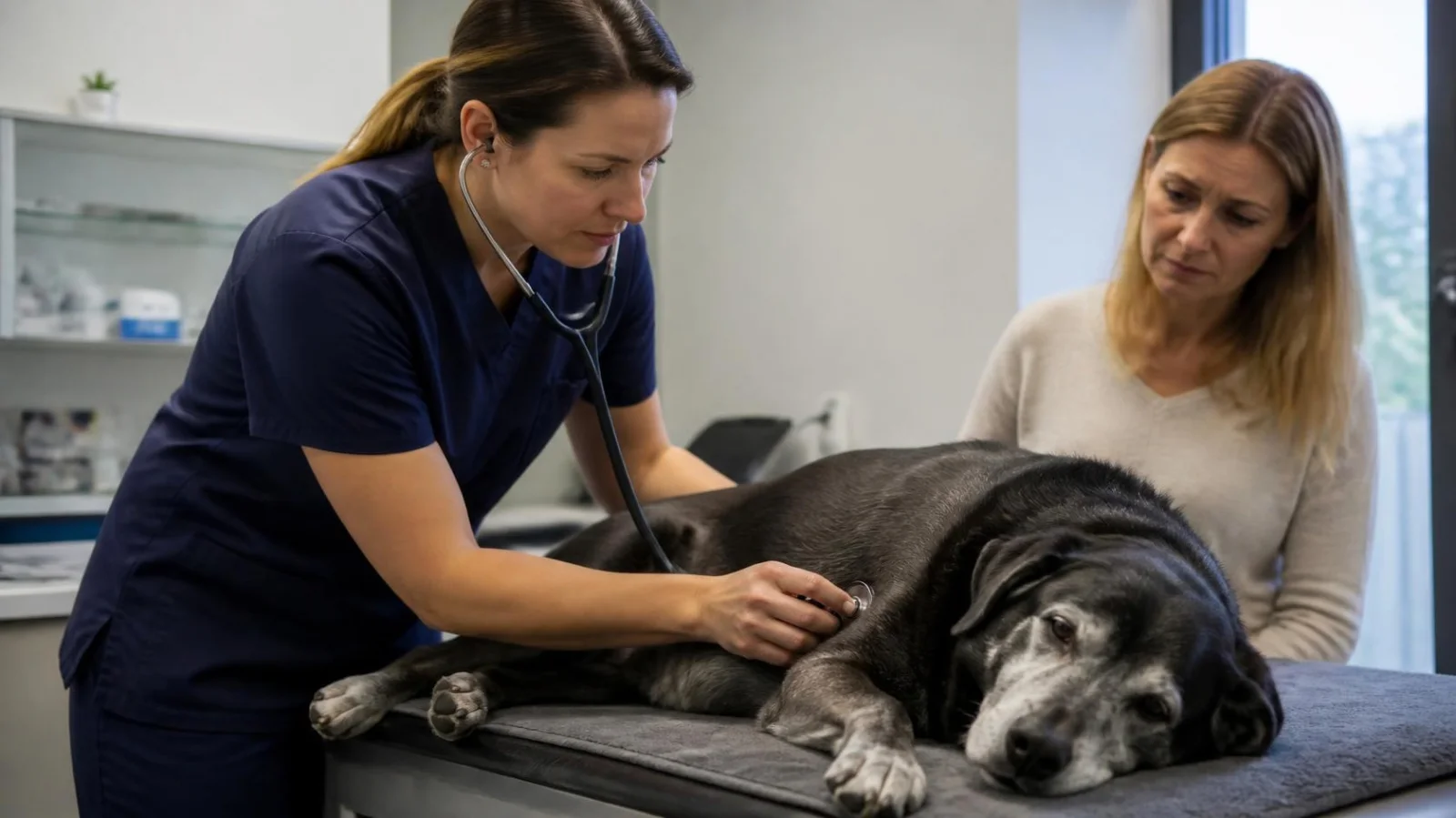
Pyometra is a bacterial uterine infection that affects an estimated one in four unspayed female dogs over their lifetime, and it is a genuine veterinary emergency — left untreated, it can progress from first symptoms to life-threatening sepsis within days. This article covers the full pathophysiology behind why it happens, the critical difference between open and closed presentations, and what treatment actually involves, at the depth this condition's seriousness warrants.
The Underlying Mechanism: The CEH-Pyometra Complex
Pyometra doesn't appear out of nowhere — it's the end stage of a progressive process called the cystic endometrial hyperplasia-pyometra complex (CEH-pyometra complex), and understanding the earlier steps explains why the condition is so strongly tied to the hormonal cycle itself rather than being an unrelated infection that happens to strike the uterus.
During diestrus, the uterine lining is exposed to sustained progesterone from the corpus luteum — the same obligate two-month luteal phase responsible for false pregnancy, covered in our reproductive endocrinology guide. Progesterone has several direct effects on the endometrium that, together, create ideal conditions for infection:
- Endometrial glandular proliferation and increased secretion, producing a nutrient-rich fluid environment — sometimes described as "uterine milk" — that functions as an excellent bacterial culture medium.
- Cervical closure, which under normal circumstances helps protect the uterus but, once bacteria are already present, prevents drainage of any resulting exudate.
- Inhibition of myometrial contractions, further reducing the uterus's ability to physically expel fluid or bacteria.
- Suppression of local cellular immune response, specifically dampening T-cell activity within the endometrium, reducing the uterus's ability to fight off bacteria that do arrive.
Repeated estrus cycles compound this: estrogen exposure during each proestrus/estrus phase increases the density of progesterone receptors in the endometrium, meaning each subsequent diestrus phase produces a progressively stronger hyperplastic response. This is why pyometra is overwhelmingly a disease of middle-aged to older intact females — the average age of onset is approximately 8 years old — rather than young dogs on their first or second cycle, even though it isn't impossible at a younger age.
Visualizing the Cascade
The whole cascade is a direct consequence of normal diestrus physiology operating repeatedly over a dog's intact lifetime — this is precisely why spaying, which removes the ovarian source of these cyclical hormones entirely, eliminates pyometra risk completely rather than just reducing it.
The Microbiology: Why E. coli Specifically
Escherichia coli is identified as the causative organism in the substantial majority of canine pyometra cases, and this isn't incidental — it reflects both opportunity and specific bacterial traits. E. coli is a normal inhabitant of the canine gastrointestinal tract and lower genital flora, positioned close to the vulva and vestibule, so ascending migration into a hormonally compromised uterus requires only a short anatomical journey rather than introduction from an external source. Strains isolated from pyometra cases frequently carry specific virulence factors — including adhesins (notably type 1 and P fimbriae) that allow the bacteria to bind tightly to endometrial epithelial cells rather than being easily flushed out, and the capacity to produce endotoxin (lipopolysaccharide, or LPS, a structural component of the bacterial outer membrane) once established. It's this LPS release, not simply the bacterial presence itself, that drives much of the systemic illness seen in advanced pyometra — circulating endotoxin triggers a cascade of inflammatory cytokine release, which is the direct molecular link between a localized uterine infection and the whole-body crisis of septic shock.
Open vs. Closed Cervix: Why This Single Detail Changes Everything
Clinically, pyometra is classified by whether the cervix remains open or closes, and this single anatomical detail is the most important factor in both presentation and prognosis.
| Feature | Open-cervix pyometra | Closed-cervix pyometra |
|---|---|---|
| Vaginal discharge | Present — often purulent, foul-smelling | Absent — nothing visible to alert the owner |
| Abdominal distension | Less pronounced, since fluid drains | Pronounced — uterus distends as fluid has nowhere to go |
| Moderate-to-severe depression/lethargy | ~30% of cases | ~56% of cases |
| Sepsis rate | ~51% of cases | ~77% of cases |
| Time to diagnosis | Often earlier, due to visible discharge | Often later, since no external sign prompts a vet visit |
| Rupture risk if untreated | Lower, pressure is relieved by drainage | Higher — internal pressure builds without an outlet |
The practical implication is stark: a closed-cervix pyometra can be progressing toward systemic crisis while the dog's owner sees no outward sign beyond vague lethargy, reduced appetite, and increased thirst — symptoms easy to dismiss as "she's just having an off week" in an older dog. This is exactly why any combination of these vague symptoms, occurring two to eight weeks after a heat cycle in an unspayed female, deserves a same-day vet call rather than a wait-and-see approach.
Clinical Signs
| Sign | Notes |
|---|---|
| Lethargy and depression | Often the earliest and most consistent sign across both forms |
| Reduced or absent appetite | Common, sometimes alongside vomiting |
| Increased thirst and urination (PU/PD) | Caused by bacterial endotoxin effects on the kidneys' ability to concentrate urine |
| Abdominal distension | More pronounced in closed-cervix cases |
| Vaginal discharge | Present only in open-cervix cases; may be bloody, purulent, or foul-smelling |
| Fever (or, in severe/septic cases, hypothermia) | A normal or even low temperature in a visibly sick dog can actually signal more severe systemic illness, not less |
| Vomiting | More common in advanced or closed-cervix cases |
Diagnosis: What a Workup Actually Looks For
- Bloodwork (CBC) typically shows leukocytosis with neutrophilia, often with a left shift (an increased proportion of immature neutrophils, indicating the bone marrow is urgently releasing cells to fight infection) and sometimes monocytosis.
- Blood chemistry often reveals azotemia (elevated kidney values) related to endotoxin effects on renal function, and sometimes elevated liver enzymes.
- Abdominal ultrasound is the key imaging tool, showing one or both uterine horns distended with fluid — ultrasound can also help distinguish pyometra from early pregnancy, since both can cause uterine enlargement.
- Radiographs can show a tubular, fluid-dense soft tissue structure in the caudal abdomen, though ultrasound provides more diagnostic detail.
- Vaginal cytology and culture, where discharge is present, help confirm the diagnosis and guide antibiotic selection.
A history detail matters enormously here: confirming the timing relative to her last heat cycle (the classic two-to-eight-week post-heat window) substantially raises or lowers suspicion before any testing even begins.
Treatment: Why Surgery Is the Default Recommendation
Ovariohysterectomy — full surgical removal of the ovaries and uterus — is the standard, recommended treatment in essentially all cases, for a straightforward reason: it removes the infected organ entirely along with the hormonal source driving the underlying CEH process, eliminating any chance of recurrence. Before surgery, dogs are typically stabilized with intravenous fluids to correct dehydration and support kidney function, along with broad-spectrum antibiotics, since many of these dogs are presenting in a compromised state where anesthesia itself carries elevated risk until stabilized.
This surgery is more involved than a routine spay — the uterus is enlarged, fragile, and filled with infected material, which raises the technical difficulty and the risk of rupture or contamination during removal compared to a healthy, routine ovariohysterectomy. This is part of why emergency pyometra surgery costs considerably more than an elective spay, as covered in our spay cost guide.
Medical (Non-Surgical) Management: A Narrow Exception
For dogs with significant breeding value, owners sometimes ask about non-surgical treatment, and it does exist — but with meaningful restrictions worth understanding rather than assuming it's a readily available alternative:
- Prostaglandin F2-alpha is used to reduce progesterone's influence and promote uterine contraction and drainage, and is useful specifically because of its luteolytic (corpus-luteum-reducing) properties.
- Antiprogestins, such as aglepristone, block progesterone receptors directly. One protocol combining aglepristone with prostaglandin treatment raised the success rate for closed-cervix cases from roughly 20% (aglepristone alone) to approximately 90% in a published series — though this still means such cases require very close, specialized monitoring and aren't a casual first choice.
- Published outcomes for medical management overall report a mean fertility rate of about 70% (ranging widely, 14-100%, across studies) in dogs that conceive afterward, alongside a mean recurrence rate of about 29% (range 0-85%) — meaning even successful medical treatment carries a real chance the pyometra returns on a future cycle.
Medical management is explicitly not recommended for dogs who are septic, running a fever or dangerously low temperature, showing signs of peritonitis, or presenting with a closed cervix — in these situations, surgery is considered the only appropriate option, and attempting medical treatment instead meaningfully increases the risk of a fatal outcome. This is a decision made jointly by owner and vet based on the individual case, not a default alternative to discuss as equivalent to surgery.
Prognosis
For dogs who are stable and not yet septic at the time of diagnosis and treatment, the prognosis following surgery is excellent, with most going on to a complete recovery and no lasting effects. The picture is more serious for dogs presenting later in the disease process: one published case series reported an overall 65% survival-to-discharge rate, reflecting a population that likely included more severe, delayed-presentation and closed-cervix cases — a reminder that averages across published literature include the sickest cases, and prompt presentation meaningfully shifts an individual dog's odds toward the better end of that range rather than the worse one. The single biggest controllable factor in outcome is time: dogs brought in promptly, before progressing to sepsis or uterine rupture, do dramatically better than dogs whose diagnosis is delayed.
What Happens If It's Left Untreated
The progression follows a recognizable pattern, and it's worth walking through the mechanism step by step rather than treating "sepsis" as a single vague endpoint:
- Circulating endotoxin (LPS) binds to immune cell receptors (notably Toll-like receptor 4), triggering massive release of inflammatory cytokines including TNF-alpha and various interleukins — this is systemic inflammatory response syndrome (SIRS) in molecular terms, the body's own immune response causing much of the damage rather than the bacteria directly.
- Widespread vasodilation and increased vascular permeability follow, causing blood pressure to drop and fluid to leak out of the vascular space into surrounding tissue — the physiological basis of septic shock.
- Reduced blood flow to the kidneys under these conditions causes acute kidney injury, compounding any direct endotoxin-mediated renal damage and explaining the azotemia seen on bloodwork.
- In closed-cervix cases, continued intrauterine pressure buildup can progress to uterine wall rupture, spilling infected material directly into the peritoneal cavity and causing septic peritonitis — a second, often fatal infection layered on top of the first.
- In the most severe, prolonged cases, disseminated intravascular coagulation (DIC) can develop — a paradoxical state where widespread clotting throughout small blood vessels consumes clotting factors faster than the body can replace them, eventually causing uncontrolled bleeding elsewhere in the body.
Each step in this cascade is both a consequence of what came before and a contributor to what follows, which is exactly why early intervention has such an outsized effect on survival — stopping the process at step one (removing the infected uterus before significant endotoxin release) is a fundamentally different clinical situation than trying to reverse a dog already deep into steps three or four.
What's Happening at the Tissue Level
Research examining pyometra tissue at the molecular level has found that closed-cervix cases show meaningfully more severe endometrial inflammation than open-cervix cases, with distinct patterns of programmed cell death pathways — both apoptosis (a regulated, "clean" form of cell death) and ferroptosis (an iron-dependent cell death pathway linked to oxidative damage) show elevated activity specifically in closed-cervix tissue samples compared to both open-cervix cases and healthy diestrus controls. This molecular-level finding mirrors what's observed clinically: closed-cervix pyometra isn't just "the same disease without visible discharge" — it represents a genuinely more severe inflammatory and cellular injury process within the uterine wall itself, which helps explain why outcomes differ so much between the two presentations even before any systemic complications develop.
A Rare Variant: Stump Pyometra
An important edge case worth knowing: a dog that has already been spayed can, in rare circumstances, still develop a condition called stump pyometra — infection in a small remnant of uterine tissue left behind after an incomplete ovariohysterectomy, particularly if any residual ovarian tissue continues producing hormones that drive the same CEH process in that remnant. This is uncommon with modern surgical technique but is a recognized complication worth mentioning to your vet if a previously spayed dog shows pyometra-like symptoms — it's a reasonable diagnostic question to raise rather than assuming spay status automatically rules out any uterine-related illness.
Surgical and Anesthetic Considerations Specific to Pyometra
It's worth understanding why vets treat this surgery with more caution than a routine spay, beyond simply "the uterus is bigger." Dogs presenting with pyometra are frequently dehydrated, may have compromised kidney function from endotoxin exposure, and can have abnormal clotting parameters in more severe cases — all factors that directly affect anesthetic safety and drug selection. Pre-surgical stabilization with IV fluids isn't a formality; it's aimed at correcting these abnormalities enough to make anesthesia survivable, and surgery is sometimes delayed by several hours specifically to allow this stabilization window, even though the underlying urgency of the condition hasn't changed. During surgery itself, extra care is taken to avoid rupturing the fragile, distended uterus while handling it, since spillage of infected contents into the abdominal cavity mid-surgery would directly cause the septic peritonitis the surgery is otherwise trying to prevent. Postoperatively, these dogs typically need more intensive monitoring than a routine spay patient — continued IV fluids, a longer antibiotic course guided by culture results, and closer observation for signs of ongoing sepsis even after the source has been surgically removed.
Risk Factors Worth Knowing
- Age — risk accumulates with each diestrus phase experienced, making middle-aged to senior intact females the highest-risk group.
- Number of heat cycles without pregnancy — each cycle without pregnancy appears to compound the cystic endometrial hyperplasia process, since pregnancy itself seems to have some protective, resetting effect on the endometrium compared to repeated non-pregnant cycles.
- Exogenous hormone exposure — certain hormone treatments, including some older mismating-prevention injections based on estrogen compounds, are well-documented to significantly raise pyometra risk by compounding the same progesterone-and-estrogen-driven endometrial changes described above, which is part of why modern veterinary guidance has moved away from those older approaches in favor of safer alternatives or straightforward spaying.
- Prior episodes of cystic endometrial hyperplasia without progressing to full pyometra — since CEH can persist in sections of the endometrium even after an affected heat cycle resolves, each subsequent diestrus phase has a head start toward recurrence in a dog who's already shown this pattern once.
- Being unspayed, full stop — this is the one non-negotiable risk factor underlying all the others. No intact female is exempt from risk regardless of how many or how few litters she's had.
Pyometra vs. Simple CEH vs. Mucometra: Related but Distinct
These three conditions exist on a spectrum and are sometimes confused with one another, but they're distinct diagnoses with different clinical significance:
| Condition | What it is | Clinical significance |
|---|---|---|
| Cystic endometrial hyperplasia (CEH) | Hormonally-driven thickening and cyst formation in the endometrium, without infection | A precursor state — can exist without ever progressing to pyometra, and is sometimes found incidentally |
| Mucometra | Accumulation of sterile (non-infected) mucoid fluid in the uterus | Less immediately dangerous than pyometra since bacterial infection and endotoxemia aren't present, but can still cause uterine distension and may predispose to later infection |
| Pyometra | Bacterial infection within a hormonally-altered uterus | The dangerous endpoint of this spectrum, carrying genuine sepsis and mortality risk |
Research comparing endometrial tissue across these three conditions alongside healthy diestrus samples has found genuinely distinct gene expression profiles for each, supporting the idea that these aren't simply "mild, medium, and severe" versions of one disease, but related conditions that can each occur somewhat independently — a dog can have CEH without ever developing pyometra, and pyometra can in some cases develop without a clearly preceding mucometra phase. This distinction matters mainly in a research and diagnostic context, but it's useful background for understanding why an ultrasound finding of "some uterine fluid" during a routine exam isn't automatically a pyometra diagnosis — the fluid's character and the dog's clinical picture both matter for sorting out which point on this spectrum is actually present.
Prevention
Spaying is the only reliable prevention, since it removes the ovarian hormone source that drives the entire CEH-pyometra cascade from step one — a spayed dog cannot develop pyometra of the uterus she no longer has. Our spay timing guide covers how vets think through the decision of when, but on the specific question of pyometra risk, the answer is unambiguous: any spay, at any point in adulthood, permanently eliminates this particular risk going forward.
What This Typically Costs
| Item | Typical range |
|---|---|
| Emergency diagnostic workup (bloodwork, ultrasound) | $300–$800 |
| Emergency ovariohysterectomy with stabilization | $1,500–$5,000+ |
| Extended hospitalization for septic/complicated cases | Can exceed $5,000, particularly with ICU-level care |
| Routine elective spay, for comparison | $361–$829 on average |
This cost comparison is exactly the argument laid out in more detail in our spay cost guide: a modest, planned expense early versus a substantially larger, higher-risk emergency bill later, on top of the health risk itself.
When to Seek Emergency Care Immediately
- Any combination of lethargy, reduced appetite, and increased thirst in an unspayed female, two to eight weeks after her last heat
- Abdominal distension or visible discomfort, regardless of discharge presence
- Any vaginal discharge following a heat cycle that's foul-smelling, purulent, or persists beyond what's normal for heat itself
- Vomiting combined with any of the above, in an intact female of any age
- A previously healthy, active senior intact female who seems suddenly "off" without an obvious explanation
This is not a condition where a 24-hour wait-and-see approach is a reasonable risk to take — same-day veterinary evaluation is the appropriate response to any of the above.
Explore This Guide
- Female Dog Heat Cycle: The Complete Guide — the cycle underlying this condition
- When to Spay a Female Dog — the only reliable prevention
- How Much Does It Cost to Spay a Dog? — comparing elective vs. emergency cost
- Do Dogs Have Periods? The Science of Heat vs. Menstruation — the hormonal mechanism behind the obligate luteal phase this condition depends on