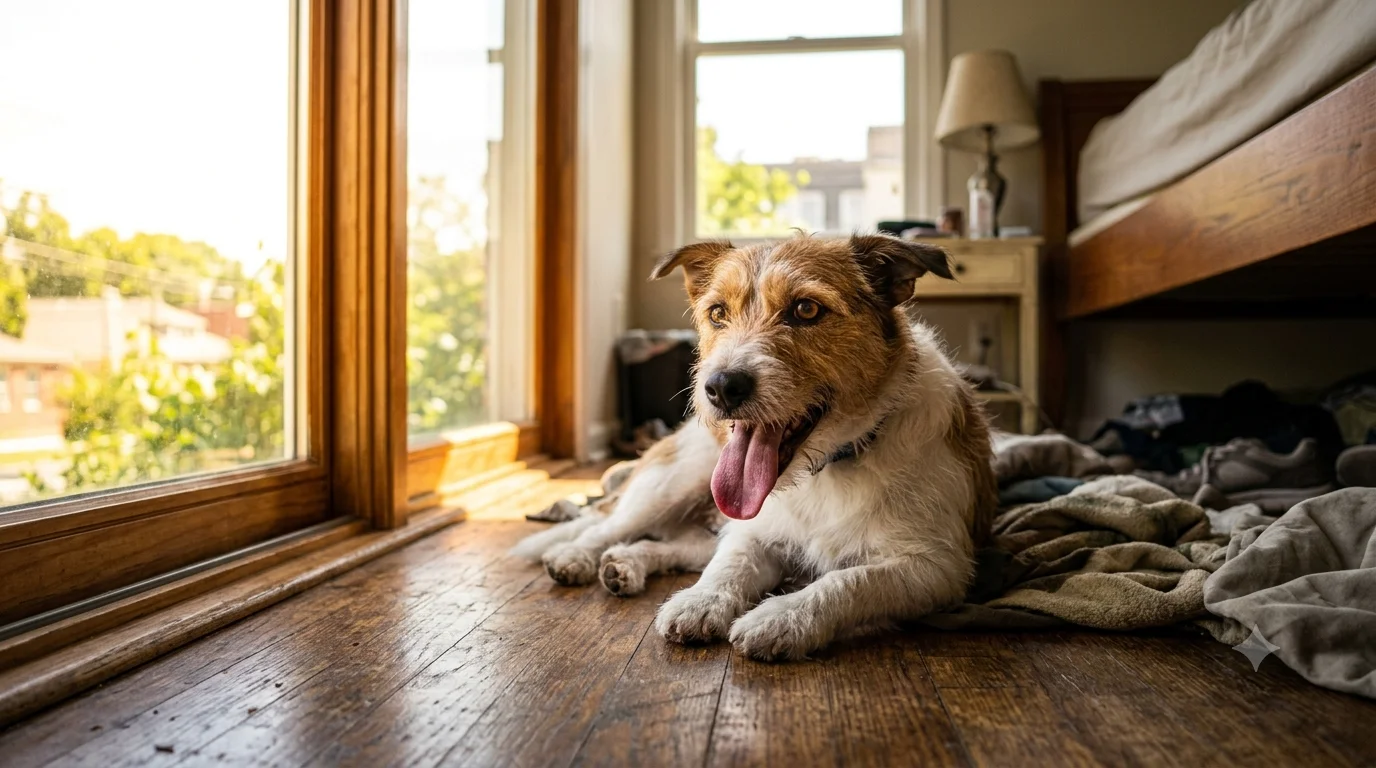
Dogs pant constantly, and most of the time it's completely normal — it's actually their main way of regulating body temperature, since they don't sweat the way humans do. But there are patterns worth recognizing, since panting can occasionally signal something beyond simple heat regulation.
Normal reasons dogs pant
- Temperature regulation — this is the big one; panting cools a dog down by evaporating moisture from the tongue, mouth, and airways
- After exercise or play — heavy panting after activity is completely expected and should settle within 20-30 minutes of rest
- Excitement — happy, excited panting (think: greeting you at the door) is normal and typically short-lived
- Mild stress or anxiety — a vet visit, car ride, or new environment can trigger panting as a stress response
When panting might mean something more
Panting at rest, with no obvious trigger
If your dog is panting heavily while just lying around, in a cool environment, with no recent activity or excitement, that's worth paying attention to — it doesn't automatically mean an emergency, but it's outside the "normal" pattern.
Panting paired with other symptoms
Watch for panting combined with: restlessness, pale or bright red gums, drooling more than usual, weakness, or an inability to get comfortable. Together, these can point toward pain, heatstroke, or another underlying issue.
Sudden, severe panting
A sudden onset of heavy panting, especially in an older dog or a breed prone to heart or respiratory issues, is worth a same-day vet call rather than a wait-and-see approach.
Heatstroke warning signs
Excessive panting combined with bright red gums, thick drooling, vomiting, or wobbliness in hot weather can indicate heatstroke — a genuine emergency requiring immediate cooling and vet care.
Breed-specific considerations
Flat-faced (brachycephalic) breeds like Bulldogs, Pugs, and Boston Terriers have narrower airways and tend to pant more heavily and more often than other breeds, even with mild activity or warm weather — this is a known trait of the breed type, though severe respiratory distress in these breeds still warrants a vet check if it seems beyond their individual normal.
What to do if you're not sure
- Move your dog to a cooler area and offer water
- Check gum color — pale, blue, or brick-red gums are a reason to seek immediate care
- Time how long the panting lasts — brief episodes tied to an obvious cause are less concerning than prolonged, unexplained panting
- When in doubt, especially with other symptoms present, a same-day vet call is the safer choice over guessing