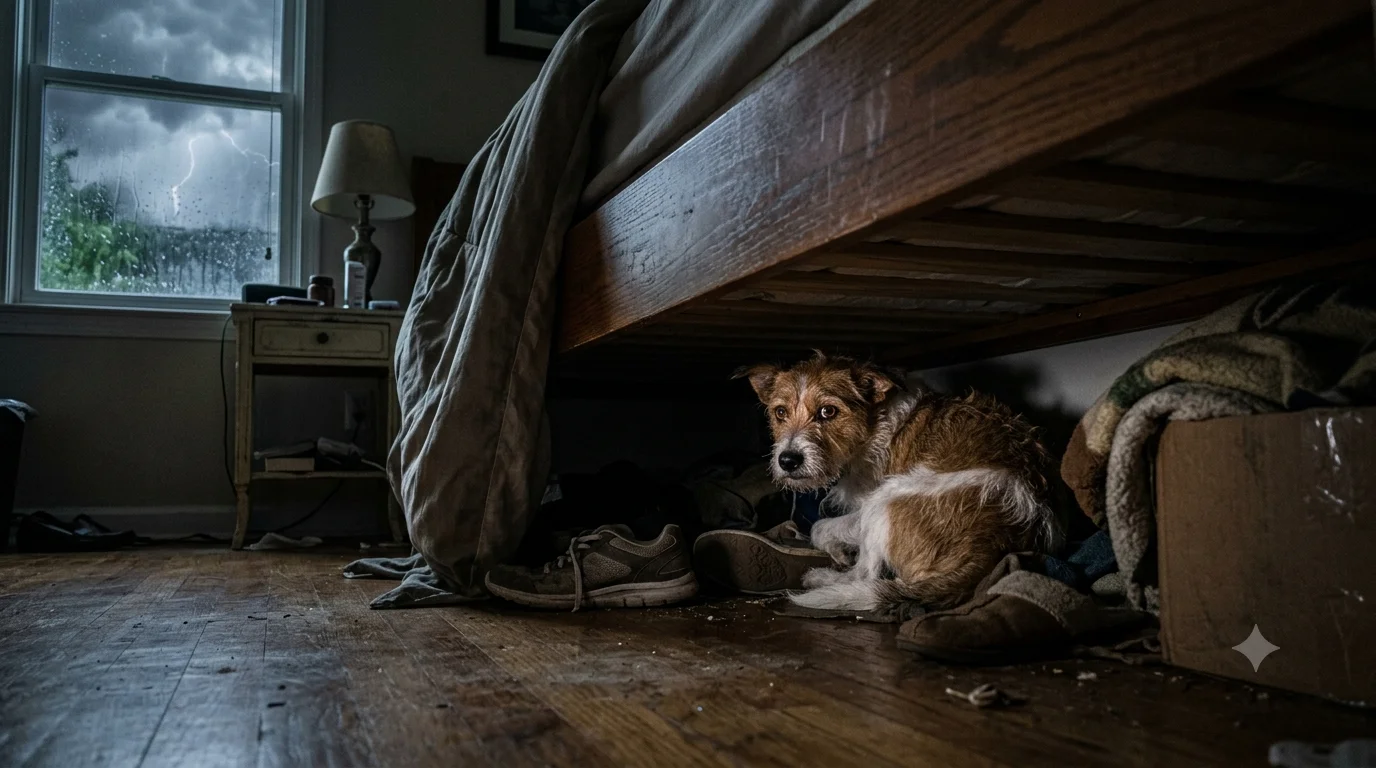
If your dog starts pacing, panting, or bolting for the nearest hiding spot the moment thunder rumbles or fireworks start popping, you're dealing with one of the most common fear responses in dogs — and there's a lot more going on than just "loud noise bad."
Why storms and fireworks specifically trigger fear
A few things make thunderstorms and fireworks uniquely distressing compared to other loud sounds:
- Unpredictability — unlike a vacuum cleaner or doorbell, dogs can't anticipate or control exposure to these sounds, which makes the fear harder to work through naturally
- A dog's more sensitive hearing — dogs hear a wider frequency range and at greater sensitivity than humans, so what sounds loud to us can be genuinely overwhelming to them
- Barometric pressure changes — some dogs seem to sense the pressure and static changes that come before a storm even starts, which is part of why some dogs get anxious before you've heard any thunder at all
- Static buildup — some dogs may feel actual static electricity in their fur during storms, adding a physical discomfort element on top of the noise
Signs of noise-related fear
- Pacing, panting, or drooling
- Hiding (under furniture, in a bathroom, in a closet)
- Trembling or shaking
- Trying to escape the yard or house during a storm
- Destructive behavior tied specifically to storm/firework events
What actually helps
Create a safe space in advance
A covered crate, a small room, or a designated hiding spot your dog already associates with calm — set this up before storm season or a known fireworks event, not during the panic itself.
Stay calm yourself
Dogs pick up on your stress level, and an overly worried or overly excited response from you can reinforce the idea that something's genuinely wrong. Calm, normal behavior from you helps signal safety.
Try a compression garment
Some dogs respond well to snug-fitting anxiety wraps, which apply gentle, constant pressure similar to swaddling — not a fix for every dog, but genuinely helpful for many.
Desensitization training (for non-emergency situations)
Playing recorded thunder or firework sounds at a very low volume, paired with treats and calm behavior, then very gradually increasing volume over weeks, can help build tolerance over time. This needs to start well before storm season, not during an actual event.
Talk to your vet about severe cases
For dogs with intense, panic-level reactions, a vet can discuss short-term anxiety medication for specific known events (like a fireworks holiday), which can be a reasonable, non-permanent tool alongside behavioral approaches.
What to avoid
- Punishing fear-based behavior — this doesn't address the fear and can make your dog more anxious overall
- Forcing your dog out of their hiding spot — let them choose where they feel safest
- Introducing a new fear-response tool (like a compression wrap) for the first time during an actual storm, rather than practicing with it beforehand
If your dog's anxiety isn't limited to loud noises and shows up more broadly — like when you leave the house — that's a related but different issue we cover in our separation anxiety guide.