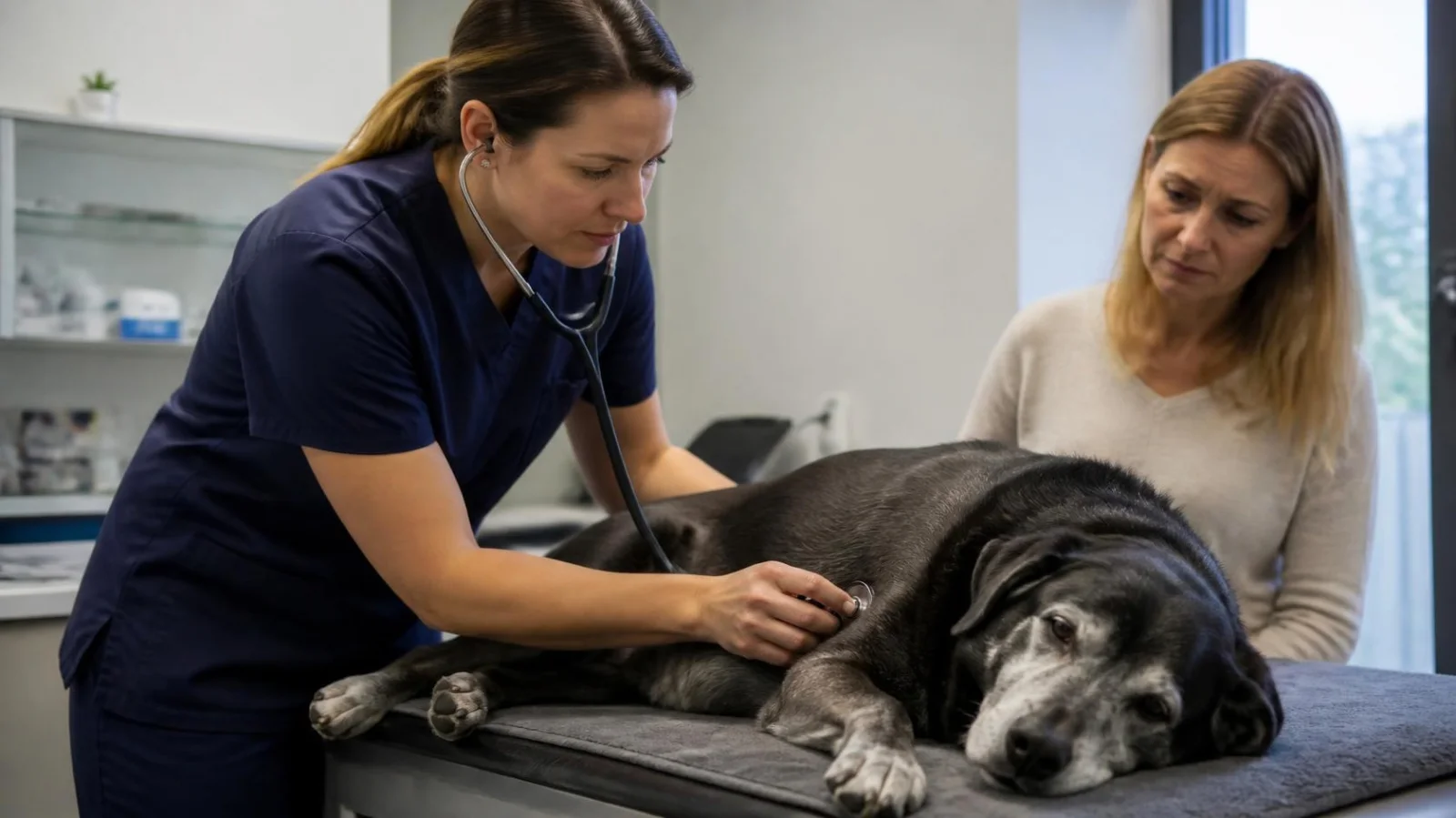
You've checked your dog for fleas, found nothing, and they're still scratching, licking, chewing, or biting at their skin. A dog can be very itchy without having visible fleas, and there are several other possible causes ranging from allergies and dry skin to mites, skin infections, and irritation from something they've come into contact with.
The tricky part is that many skin problems look similar at first. Scratching alone usually isn't enough to tell you what's causing the itch.
If your dog is itchy but you cannot find fleas, here's what to look for, what the most common causes are, and when it's time to have your dog's skin checked by a veterinarian.
Why is my dog itchy but has no fleas?
Fleas are only one possible cause of itching. Dogs can also develop itchy skin because of environmental allergies, food allergies, parasites other than fleas, skin infections, contact irritation, dry skin, and other skin conditions.
Sometimes the original cause is no longer obvious. For example, a dog may have an allergic reaction that damages the skin barrier, followed by a bacterial or yeast infection that makes the itching worse.
That's why a dog can continue scratching even when you cannot find a single flea.
The most common causes of itching without fleas
1. Environmental allergies
Environmental allergies are a common reason dogs develop persistent itching. Dogs can react to things in their surroundings such as pollens, grasses, molds, or dust mites.
Allergic itching often affects areas such as the paws, face, ears, belly, and armpits, although the distribution can vary between dogs.
One clue is timing. If your dog's itching becomes noticeably worse during particular seasons or after spending time outdoors, an environmental trigger may be involved.
However, seasonal patterns are not enough to diagnose an allergy. A veterinarian may need to rule out parasites and infections before determining what is driving the itching.
2. Food allergies
Food allergies can cause itchy skin in some dogs. They may also be associated with recurrent ear or skin problems and, in some cases, digestive symptoms.
Food-related itching can be difficult to identify because the ingredient responsible is not necessarily something your dog started eating recently.
If a food allergy is suspected, randomly switching foods or adding supplements usually isn't enough to establish the cause. Your veterinarian may recommend a structured elimination diet followed by a controlled food challenge.
3. Mites and other parasites
Not finding fleas does not mean that your dog is free from parasites.
Different types of mites can cause significant itching, and some are difficult to identify without a veterinary examination and appropriate testing. Ticks and other external parasites can also irritate the skin.
This is one reason a dog with intense itching may need a proper skin and parasite examination even when a careful owner cannot see anything moving through the coat.
4. Yeast or bacterial skin infections
Skin infections can cause or intensify itching. They may develop as a secondary problem when another condition, such as allergies, has already damaged the skin.
Look for clues such as:
- Red or inflamed skin
- Greasy or unusually oily skin
- A strong or unusual odor
- Crusting or scabs
- Hair loss
- Darkened or thickened skin
- Repeated licking or chewing of one area
These signs can suggest a skin problem, but they do not tell you whether the underlying cause is bacterial, yeast-related, allergic, parasitic, or something else. Veterinary testing may be needed.
5. Contact irritation
Sometimes the trigger is something that touches your dog's skin.
New shampoos, cleaning products, laundry detergents, bedding materials, plants, grasses, or other substances can irritate sensitive skin.
Contact irritation may be more noticeable on areas that have direct exposure, such as the paws, belly, or areas that touch bedding or flooring.
If the itching started soon after introducing a new product, make a note of the change and discuss it with your veterinarian if the symptoms continue.
6. Dry or irritated skin
Dry skin can contribute to itching, particularly when environmental conditions are dry or when the skin has been irritated by excessive bathing or unsuitable grooming products.
Flaking or mild dryness does not automatically mean your dog's diet is deficient. Persistent skin problems should be evaluated rather than assuming that adding a supplement will solve the problem.
Why does my dog itch so much but have no fleas?
If your dog is very itchy despite having no visible fleas, the intensity of the scratching is an important clue that something is irritating the skin.
Pay attention to what your dog is actually doing. Scratching with the hind legs, licking the paws, chewing the legs, rubbing the face, shaking the head, or biting at the skin can all be ways dogs respond to itch or discomfort.
Also look at the skin itself. Redness, scabs, hair loss, odor, bumps, darkened skin, or moist areas can provide useful clues for your veterinarian.
The more persistent the itching becomes, the more important it is to identify the underlying cause rather than repeatedly trying different home remedies.
My dog keeps scratching and biting but has no fleas
Scratching combined with biting or chewing can cause significant skin damage surprisingly quickly.
A dog may start with a small itchy area and then create broken skin through repeated scratching and chewing. Once the skin barrier is damaged, secondary infection can make the area even more uncomfortable.
If your dog is repeatedly biting one area, check it for redness, moisture, swelling, wounds, or hair loss.
Don't assume that the absence of fleas means the problem is harmless. Persistent self-trauma is a reason to have the skin evaluated.
What if my dog is itching constantly?
A dog that is itching constantly is different from a dog that occasionally scratches.
Frequent scratching, licking, chewing, or rubbing can interfere with sleep and normal activity and can damage the skin.
If the itching is persistent, worsening, causing wounds, or repeatedly returning, a veterinary examination can help determine whether the problem is caused by allergies, parasites, infection, irritation, or another condition.
What if my puppy is itching but has no fleas?
Puppies can itch for many of the same reasons as adult dogs, but persistent itching in a puppy deserves particular attention because parasites, skin infections, environmental exposures, and other problems can occur at a young age.
If your puppy is scratching occasionally but otherwise appears comfortable, monitor the skin and look for obvious irritation.
If your puppy is itching a lot, scratching repeatedly, biting the skin, losing hair, developing redness or scabs, or showing other signs of illness, contact your veterinarian rather than assuming it is simply dry skin.
How to narrow down the possible cause
You cannot reliably diagnose most causes of canine itching just by looking at the skin, but the pattern can provide useful information.
| What you notice | Possible clues | What to do |
|---|---|---|
| Itching gets worse during certain seasons | Environmental allergies may be one possibility | Track when and where the itching occurs and discuss the pattern with your veterinarian |
| Itchy paws, face, ears, or belly | Allergies or other skin conditions may be involved | Check the skin for redness, odor, hair loss, or other changes |
| Strong skin odor with redness or greasy skin | Skin infection may be contributing | Arrange a veterinary examination |
| Intense itching with no obvious cause | Parasites such as mites cannot be ruled out by a visual flea check | Have your dog examined and tested if your veterinarian recommends it |
| Itching started after a new product | Contact irritation may be possible | Note the product and discuss the reaction with your veterinarian |
| Scratching plus hair loss, scabs, or wounds | Skin damage or an underlying skin disorder | Have the affected area evaluated |
How can a veterinarian find the cause?
When a dog is itchy, the goal is not simply to stop the scratching. The underlying cause needs to be identified.
A veterinarian may start by examining the skin, ears, paws, and coat and asking about your dog's environment, diet, parasite prevention, grooming products, and the timing of the symptoms.
Depending on what they find, they may recommend tests such as skin scrapings, cytology, examination for parasites, or other diagnostic tests.
If allergies are suspected, the diagnostic process may involve ruling out parasites and infections first. A suspected food allergy may require a carefully controlled elimination diet rather than simply changing foods at random.
What can I do at home while I figure out the cause?
There are a few sensible steps you can take while arranging veterinary advice, but avoid treating the condition blindly.
- Check the skin and coat. Look for redness, scabs, hair loss, odor, wounds, or irritated areas.
- Review recent changes. Think about new foods, treats, shampoos, detergents, bedding, cleaning products, or outdoor exposure.
- Keep parasite prevention current. Follow your veterinarian's recommended flea and parasite-control plan.
- Avoid excessive bathing. Repeated bathing can further irritate some dogs' skin.
- Prevent self-trauma. If your dog is repeatedly scratching or chewing an area and causing wounds, ask your veterinarian how to protect the skin safely.
- Keep notes. Record when the itching started, where it occurs, what it looks like, and whether it changes with seasons, food, or environment.
Avoid applying human creams, essential oils, or other home remedies to irritated skin unless your veterinarian has specifically recommended them. Some products that are safe for people can be inappropriate for dogs.
When should I take my itchy dog to the vet?
It is a good idea to contact your veterinarian when itching is persistent, severe, recurring, or causing visible skin damage.
- Scratching or chewing is frequent or difficult to interrupt
- Your dog is creating wounds or bleeding
- There is significant redness, swelling, or crusting
- The skin has a strong or unusual odor
- Your dog is losing hair in itchy areas
- The itching keeps returning
- Your dog has repeated ear problems alongside the skin itching
- Your puppy is persistently itchy
- Your dog seems uncomfortable or is behaving differently
Seek prompt veterinary attention if your dog develops facial swelling, difficulty breathing, collapse, or another sudden severe reaction, particularly if the symptoms appeared rapidly after a possible exposure.
Can a dog have fleas even if I can't find any?
Yes. Not seeing fleas during a quick inspection does not always prove that fleas are not involved.
Fleas can be difficult to spot, and dogs can also remove evidence through grooming. Some dogs are highly sensitive to flea saliva, meaning that even limited exposure can cause substantial itching.
This is why veterinarians consider the entire history and skin examination rather than relying only on whether an owner saw a flea.
It is also important to remember that flea prevention does not rule out every other cause of itching. A dog can have appropriate flea control and still develop allergies, infections, mites, or irritation from another source.
Dog itching with no fleas: the bottom line
If your dog is scratching but you cannot find fleas, don't assume that nothing is wrong. Allergies, parasites other than fleas, skin infections, contact irritation, and dry or irritated skin can all cause itching.
The pattern matters. Occasional scratching may be insignificant, while constant scratching, biting, licking, hair loss, redness, odor, scabs, or wounds deserve closer attention.
Because many skin conditions look similar, persistent itching is usually better approached by finding the underlying cause rather than repeatedly trying different treatments at home.
If your dog is very itchy, causing damage to their skin, or showing other signs of illness, contact your veterinarian for an appropriate examination and treatment plan.