A crate is one of those purchases that's easy to get wrong — buy the wrong size, the wrong type, or the wrong build quality for your dog's temperament, and you end up buying a second one within a year. This guide walks through exactly how to choose, not just what to buy.
Step one: get the size right
This matters more than any other decision. A crate should be big enough for your dog to stand up, turn around, and lie down comfortably — but not so large that they can use one end as a bathroom and still have room to avoid it, which can actually slow down house training.
| Dog's weight | Typical crate size |
|---|---|
| Under 25 lbs (Chihuahua, small terriers) | Small (18-24") |
| 25-40 lbs (Beagle, Cocker Spaniel) | Medium (30") |
| 40-70 lbs (Border Collie, Standard Poodle) | Large (36") |
| 70-90 lbs (Labrador, German Shepherd) | XL (42") |
| 90+ lbs (Great Dane, Mastiff) | XXL (48"+) |
If your dog is still a puppy, buy for their adult size and use a divider panel (most wire crates include one, or sell one separately) to section off extra space until they grow into it — this saves you from buying two crates.
Types of crates, and which dog they actually suit
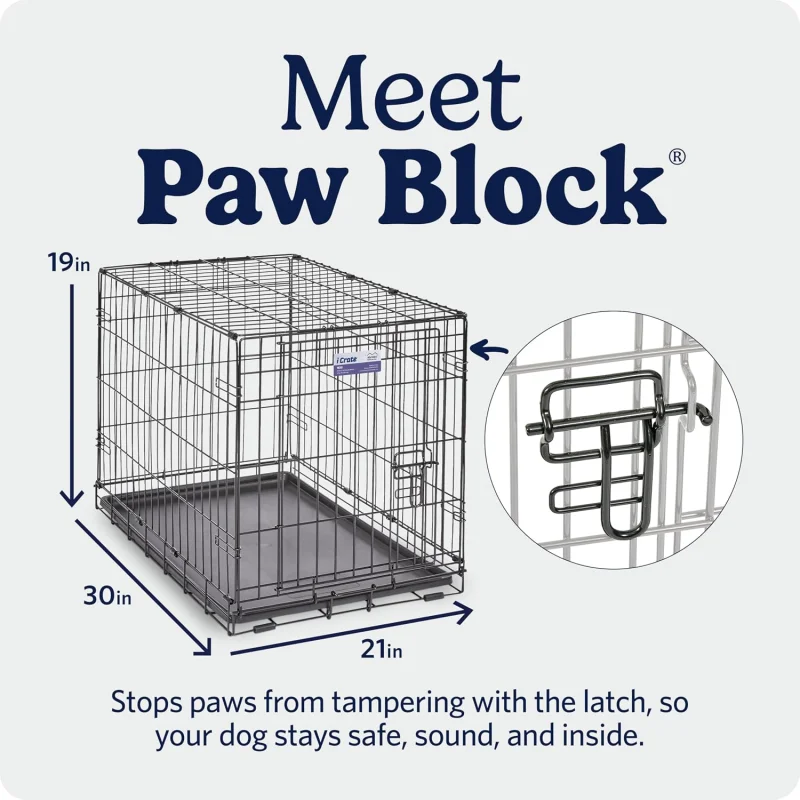
Wire crates
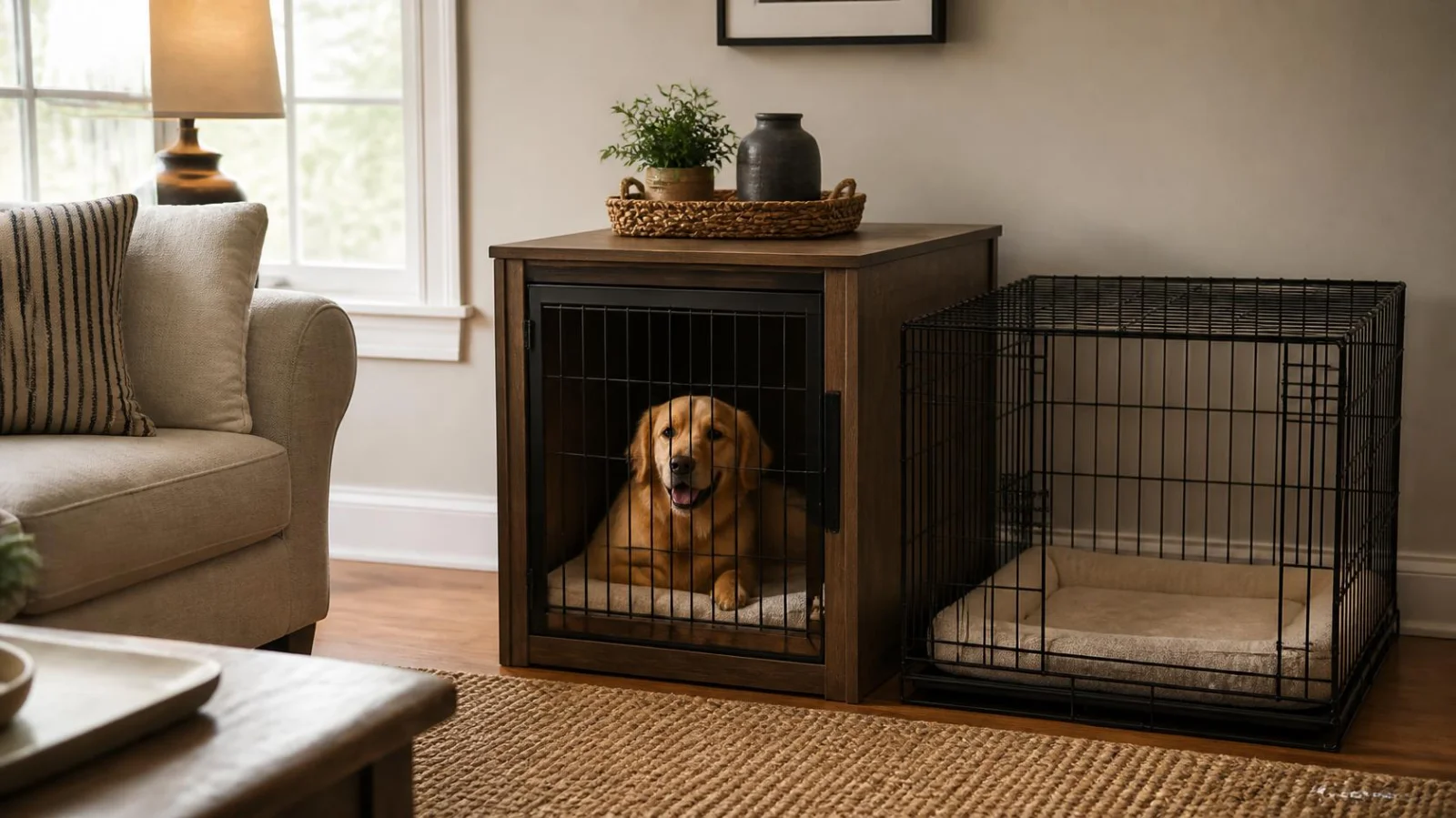
The most common and versatile option — good visibility and airflow, foldable for storage or travel, and usually the most affordable per size. The tradeoff is they're the least visually discreet option if you care about how it looks in your living room.
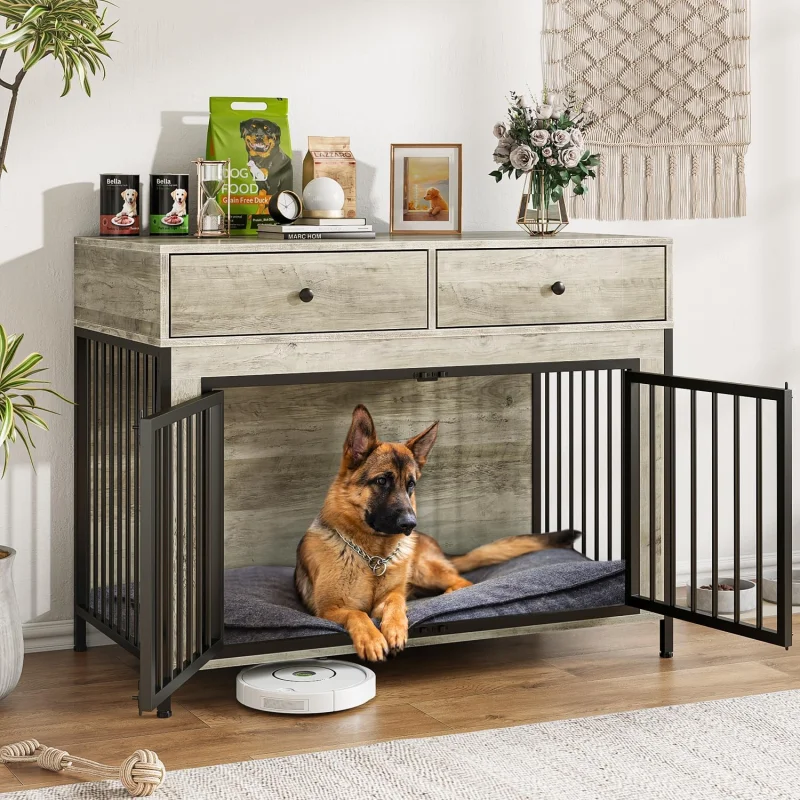
Furniture-style crates
A genuinely growing category — these are built to double as an end table, TV stand, or bench, with the crate function built into a piece that looks like real furniture. They're a strong pick if you want the crate to blend into your home rather than stand out, though they typically cost meaningfully more than an equivalent wire crate and are heavier to move.
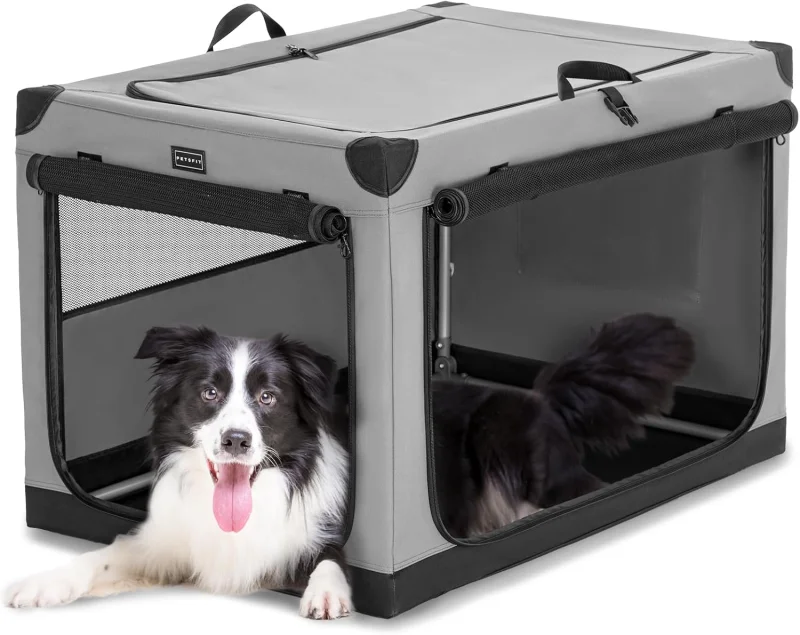
Soft-sided crates
Lightweight and portable, good for calm, already-crate-trained dogs and for travel — not a good choice for a dog who chews, scratches, or tries to escape, since the material won't hold up to that kind of pressure.
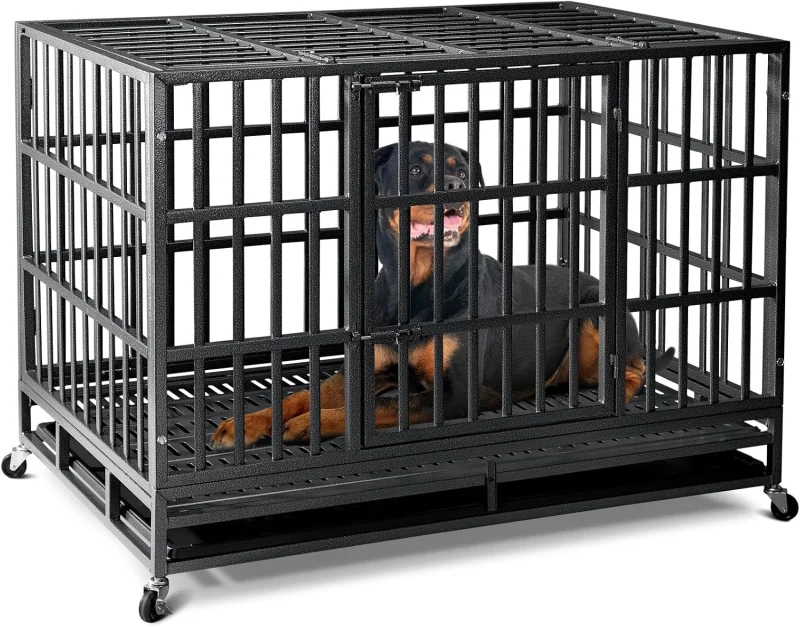
Heavy-duty / escape-proof crates
Built with reinforced material and secure locking mechanisms specifically for dogs who are strong chewers, anxious escape-attempters, or have successfully broken out of a standard crate before. These cost significantly more than a standard wire crate, but for a dog who's already destroyed or bent their way out of one, it's often the only option that actually holds. If your dog falls into this category, it's worth reading alongside our guide to chew toys for aggressive chewers, since the underlying chew-strength consideration is similar.
Travel and car crates
Built lighter and more compact than home crates, sometimes crash-tested for car safety specifically. If you regularly drive with your dog, a dedicated travel crate (rather than hauling your home crate back and forth) is worth the separate purchase.
Crate covers — worth it?
A crate cover can help create a more den-like, secure feeling for dogs prone to anxiety, and it's a common recommendation alongside crate training. If your dog seems more settled with reduced visual stimulation, a cover is a low-cost thing to try — just make sure airflow isn't restricted and the cover is secured well enough that an anxious dog can't pull it in and chew it.
Budget vs. premium: what you're actually paying for
A budget wire crate does the fundamental job — secure containment, correct sizing — perfectly well for most dogs. Where premium pricing tends to actually matter:
- Escape-proof / heavy-duty crates — the reinforced material and locking mechanisms are a real functional difference, not just styling, if your dog has a history of breaking out
- Furniture-style crates — you're paying for aesthetics and build quality that holds up as actual furniture, which is a legitimate reason to spend more if it matters to you, but not a functional necessity for the dog
- Durability for destructive dogs — a cheap crate with weak latches or thin wire can genuinely fail with a strong, anxious, or escape-motivated dog, where a mid-range option holds
For a calm, average dog with no escape history, a budget wire crate is a completely reasonable, non-compromised choice.
Crate placement matters more than people expect
Where you put the crate affects how well your dog settles into it. A quiet corner, away from high foot traffic but still in a room where the family spends time (not an isolated back room), tends to work best — dogs generally do better when a crate feels like part of the household rather than exile.
A note on crate size for dogs with anxiety
If your dog struggles specifically when left alone, the right crate is only part of the picture — the training approach matters just as much as the equipment. Our separation anxiety guide covers the behavioral side in depth, and pairs well with proper crate training specifically (a topic significant enough that we've covered it in its own dedicated guide).