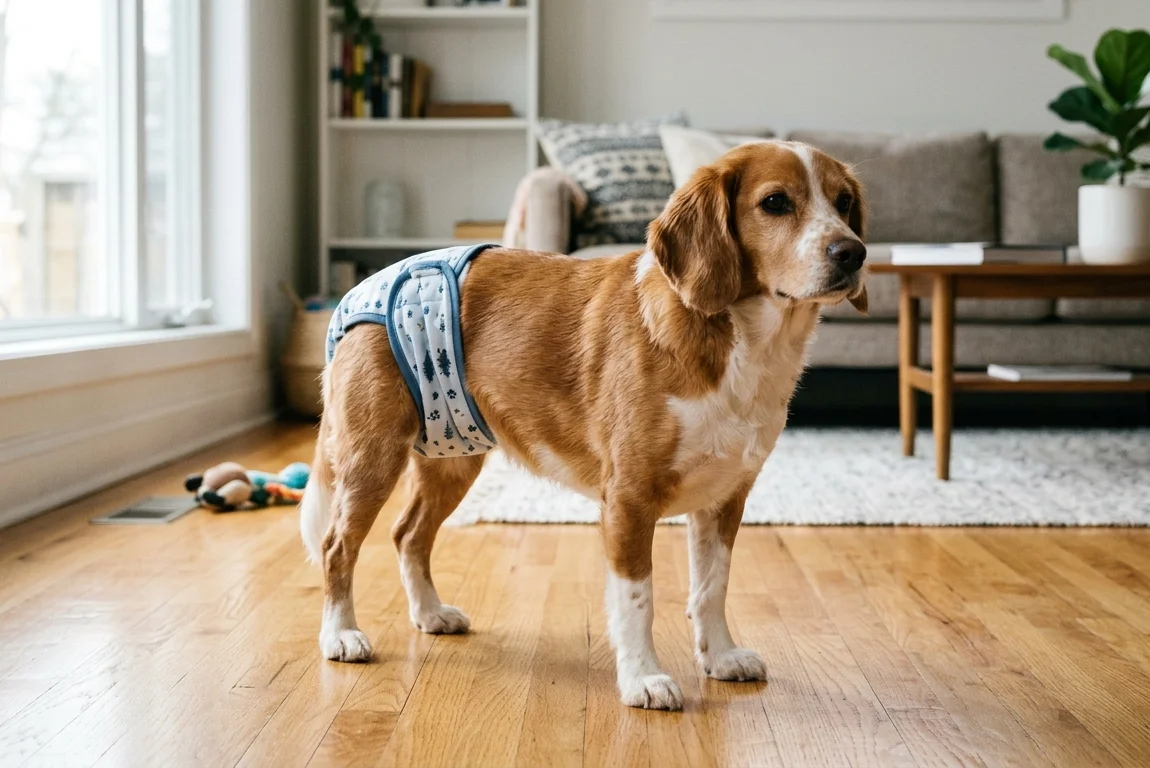
The biology of heat is manageable once you understand it — the actual day-to-day challenge for most owners is simpler and messier: keeping blood off the couch, the carpet, and the dog bed for two to four weeks. Nobody warns you about this part in the same detail as the biology itself, which is exactly why this guide exists. This is the practical companion to our heat cycle overview — everything about the products, sizing, and cleaning routines that make this stretch manageable rather than miserable.
How Much Mess to Actually Expect
Bleeding intensity isn't constant across a heat cycle — it follows a fairly predictable arc, which is useful to know before you overbuy (or underbuy) supplies. As covered in more depth in our heat duration guide, discharge tends to be heaviest early and lighten later, even though she remains fertile and needs precautions well past the point the mess itself has tapered off.
Mess is typically heaviest in the first week and tapers from there — but the lighter final stretch (shown in the palest band) is often exactly when she's most fertile, which is why precautions should outlast the visible mess by a good week or two.
Your Main Options
| Option | Best for | Cost per heat cycle | Effort level |
|---|---|---|---|
| Disposable diapers | Convenience, travel, first-time users unsure of sizing | $15–$40 depending on size and brand | Low — toss and replace |
| Washable diapers | Repeat use across multiple heat cycles, cost savings over time | $15–$25 upfront, then just laundry | Medium — requires regular washing |
| Diaper + reusable liner combo | Extending absorbency between changes, heavier bleeders | $20–$35 for diapers plus liners | Medium |
| No diaper, confinement + cleanup only | Short-haired dogs, light bleeders, owners home most of the day | $0 in diapers, ongoing cleaner cost | High — constant vigilance and cleanup |
Disposable vs. Washable: The Real Tradeoffs
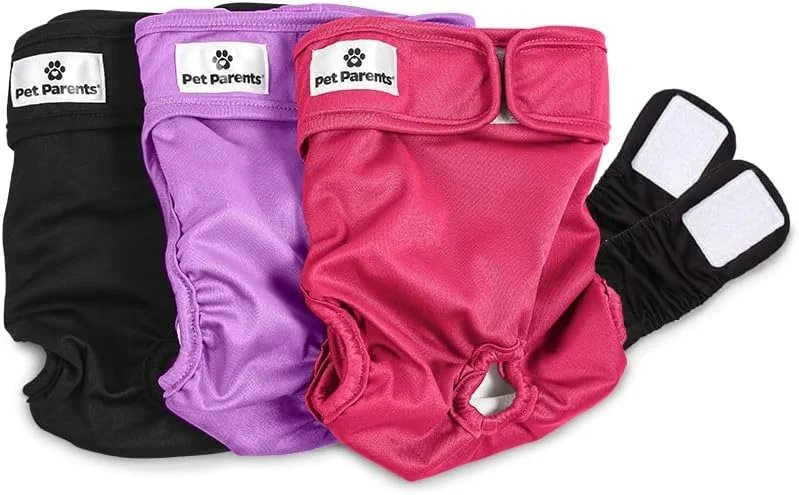
Disposable diapers are the lowest-effort option and a reasonable choice if this is your dog's first heat and you're not yet sure what fit or routine works for her. The Simple Solution Disposable Female Dog Diapers are a widely used option with a wetness indicator that tells you when a change is needed rather than guessing, and a stretch waistband designed to move with her rather than sliding down. The tradeoff is straightforward: you'll go through a meaningful number of them across a full 2-4 week heat, and the ongoing cost adds up faster than a one-time washable purchase.
Washable diapers cost a bit more upfront but pay for themselves within a single heat cycle if you're doing this more than once (which, unless you're spaying soon, you will be — heat happens roughly twice a year). The Pet Magasin Washable Female Dog Diapers are a solid mid-range option, with a moisture-wicking inner layer designed to keep skin drier than a simple absorbent pad would. The genuine downside is laundry — you're committing to washing soiled diapers regularly rather than tossing and forgetting.
This section includes affiliate links — if you purchase through them, ItsWagging may earn a small commission at no extra cost to you.
A practical middle ground many owners land on: washable diapers as the everyday option, with a small stash of disposables on hand for travel, boarding, or days you simply don't want to deal with laundry.
Getting the Sizing Right
Sizing is, by a wide margin, the most common source of frustration with dog diapers — an ill-fitting diaper leaks regardless of how absorbent the material is, and reviews across nearly every brand mention this as the main complaint. The fix is simple but easy to skip: measure before you buy rather than guessing from her weight alone.
| How to measure | What it determines |
|---|---|
| Wrap a soft tape measure around the narrowest part of her waist, just in front of the hind legs | This is the measurement nearly every sizing chart actually uses — not her overall weight |
| Measure snugly but not tight, the way the diaper itself should sit | Too loose and it slides down; too tight and it can irritate skin or restrict movement |
| If she falls between two sizes, size up | A slightly loose fit with a properly placed tail hole outperforms a too-tight fit that rides awkwardly |
| Check the tail hole placement specifically for very small or long-bodied dogs | Reviews consistently note tail holes that are too low or too small are a common fit failure point on some brands |
A properly fitted diaper should let her walk, sit, and lie down completely normally. If she's waddling, scooting, or trying to bite at it constantly, it's very likely a fit problem rather than something she'll simply "get used to." Don't hesitate to size up or try a different brand's cut if the first one you try clearly isn't working after a fair trial period of a day or so.
Getting Her to Actually Accept Wearing One
Most dogs adjust within a day or two, but the first attempt often goes better with a bit of a plan rather than just strapping it on and hoping:
- Let her sniff and investigate it first, rather than putting it on cold — a few seconds of curiosity goes a long way toward reducing the "something is wrong with me" reaction.
- Put it on right before something positive — a walk, a meal, a favorite toy — so she associates the sensation with something good rather than only noticing the diaper itself.
- Expect some initial scooting, walking stiffly, or trying to remove it — this typically fades within the first hour or two as she gets used to the sensation, not a sign it's a bad fit unless it persists well beyond that.
- Don't leave her unsupervised with it on at first, until you're confident she's not going to chew at the fasteners or try to remove it in a way that could be a choking or ingestion risk.
- Praise calm behavior while it's on, rather than only reacting when she fusses at it — reinforcing calm acceptance works faster than correcting resistance.
Preventing Skin Irritation
A diaper worn too long between changes, or a poor fit that traps moisture against the skin, can lead to irritation, redness, or a mild rash — genuinely the most common downside of extended diaper use rather than a rare complication. A few habits prevent this reliably:
- Change disposables at least every 4-6 hours, or sooner if the wetness indicator shows it's saturated — don't stretch it to "once in the morning, once at night" regardless of how the indicator looks.
- Check underneath at every change, not just when you notice a smell — catching mild redness early prevents it from progressing to a genuine rash.
- Let her go without the diaper for supervised stretches when you're able to watch her directly, giving her skin some time to fully air out during the day.
- Keep the area clean and dry at each change — a quick wipe with a pet-safe, unscented wipe before putting on a fresh diaper helps more than it might seem like a small step would.
If you do notice redness, a rash, or she seems unusually bothered by the area beyond typical diaper adjustment fussiness, it's worth a quick vet check to rule out a developing skin infection rather than assuming it will resolve with the diaper still in place. Catching this early, within a day or so of first noticing it, generally means a quick topical fix rather than anything more involved.
Protecting Furniture, Bedding, and Floors
Diapers handle what she's wearing, but a few additional steps protect the rest of the house during the weeks she's not wearing one (sleeping, supervised free time):
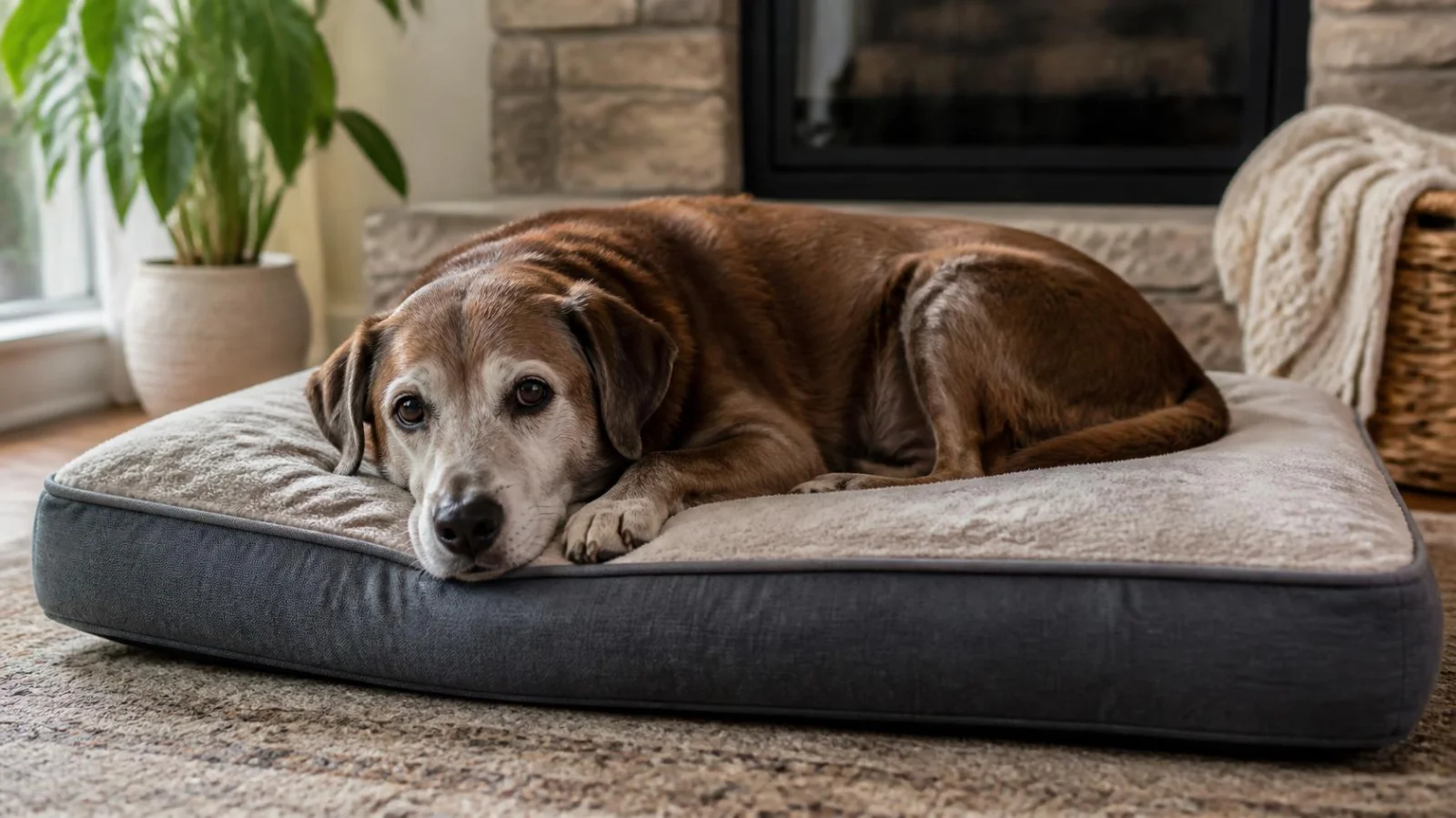
- Waterproof mattress-style protectors under her regular bedding are a one-time purchase that saves a washable dog bed cover from repeated staining.
- Washable puppy pads or a folded old blanket in her favorite resting spots gives you something quick to swap and wash rather than dealing with the couch or carpet directly.
- A designated "heat cycle" blanket or throw for the couch, if she's normally allowed up there, saves your regular upholstery from repeated spot-cleaning.
What Actually Gets Stains and Odor Out
Regular household cleaners or carpet spot removers often fail against blood and urine-based stains because they don't address the underlying organic matter — this is where a proper enzymatic cleaner earns its reputation, and it's genuinely one of the few product categories in pet care where the "as seen on TV" style claims actually hold up under normal use. The Rocco & Roxie Professional Strength Stain & Odor Eliminator uses a bio-enzymatic formula that breaks down the organic material causing both the stain and the odor, rather than just masking the smell temporarily — genuinely useful for anyone who's tried a generic cleaner and had the same spot reappear (or start smelling again) a few days later.
A few practical application notes that make any enzymatic cleaner work better:
- Blot, don't rub, fresh stains before applying cleaner — rubbing pushes the stain deeper into carpet fibers or upholstery.
- Saturate the area generously, not just a light spray — enzymatic cleaners need to actually reach the same depth the stain penetrated to fully break it down.
- Let it sit and air-dry rather than immediately blotting it away — the enzymes need contact time to work, usually specified on the product's instructions.
- Treat the area again if any odor lingers once dry — a single application handles most fresh stains, but a stain that's already set for a day or two sometimes needs a second treatment.
Laundry Routine for Washable Diapers
Keeping washable diapers in good rotation is simpler with a system rather than washing one at a time as needed:
- Buy at least 3, ideally a set of 4-5, so you always have a clean one ready while others are in the wash or drying.
- Rinse or shake off solid debris before machine washing to keep the washer itself cleaner between loads.
- Wash on a warm cycle with a pet-safe or fragrance-free detergent, avoiding fabric softener, which can reduce the absorbency of the inner liner over time.
- Air dry when possible rather than high heat, which can degrade elastic and Velcro fasteners faster over repeated washes.
DIY Diaper Options: Do They Actually Work?
A popular budget approach involves repurposing human sanitary pads or baby diapers with a hole cut for the tail, held on with a fabric wrap or a repurposed baby diaper cover. This can work reasonably well in a pinch, particularly for a single night or when you've run out of the real thing, but it comes with genuine tradeoffs worth knowing before relying on it for a full heat cycle:
- Human sanitary products aren't designed for a dog's anatomy or movement pattern, so they tend to shift out of place more than purpose-made dog diapers, especially during normal activity like walking or lying down.
- Adhesive wings meant for human underwear can stick to fur uncomfortably, sometimes pulling on skin or hair when removed.
- A poorly secured DIY setup increases ingestion risk if she manages to pull pieces loose and chew on them, which is a real concern with cotton fibers or plastic backing.
If you're genuinely testing the waters before committing to a purpose-made product, a DIY setup for a day or two is a reasonable trial — just supervise closely and don't treat it as a long-term solution for the full multi-week heat.
Traveling or Boarding During Heat
A few extra considerations apply if life doesn't pause just because she's in heat:
- Most boarding facilities and doggy daycares won't accept an intact female in heat, both for her safety around other dogs and to avoid any risk of accidental mating on-site — call ahead before assuming a booking will go through as normal.
- Car rides are manageable with a diaper and a washable seat cover or absorbent liner underneath her regular car setup, just in case of a leak during a longer trip.
- Hotels and rentals are worth protecting the same way you would at home — bring a couple of extra diapers and a small travel-sized enzymatic cleaner spray, since an accident on someone else's carpet or bedding is a bigger headache away from home.
- If you're relying on a friend or family member to dog-sit during this period, walk them through the diaper routine and leash precautions explicitly rather than assuming it's obvious — this is exactly the kind of situation where an accidental mating slips through from a well-meaning but under-informed sitter.
Building a Simple "Heat Kit"
Having everything gathered in one place before her cycle starts (or as soon as you notice the first signs) beats scrambling mid-cycle:
- A few days' worth of diapers, whichever type you've chosen
- A couple of extra liners if you're using the diaper-plus-liner combo approach
- Unscented pet-safe wipes for quick cleanup at changes
- A bottle of enzymatic cleaner, already in the house rather than an emergency purchase after the first accident
- A designated old towel or blanket for her resting spots
- A note on your calendar or phone with her expected start date range, based on her typical cycle history if this isn't her first heat
A Quick Note on Odor
Some change in scent during heat is normal — it's part of what signals her fertile status to other dogs, and it's not something you can fully eliminate with cleaning products since it's coming from her, not just leftover mess on surfaces. Regular gentle hygiene (a damp wipe-down, keeping her bedding fresh) helps with household odor generally, but don't expect the underlying scent change to disappear until her cycle ends — that's normal biology working as intended, not a hygiene failure on your part.
Diapers Don't Replace Supervision
It's worth stating plainly: a diaper manages mess, not fertility or mating risk. A determined intact male can still attempt to mate with a diapered female, and a diaper is not a reliable barrier against this — it's a household cleanliness tool, not birth control. Leash discipline on walks and secure fencing at home, covered in our fertility and mating risk guide, remain essential regardless of what she's wearing.
Diapers vs. Belly Bands: Know the Difference
It's worth clearing up a common mix-up before you shop: belly bands are designed primarily for male dogs, wrapping around the waist to cover the area without a tail hole or the fuller coverage a female needs for heat-related discharge. A true female dog diaper is shaped differently, with a tail opening and coverage designed around female anatomy specifically. If a product listing doesn't specify "female" diaper or doesn't show a tail hole in the product photos, it's very likely designed for male dogs and won't fit or function correctly for managing heat.
Managing Heat With Other Pets in the House
If you share your home with other animals, a few extra precautions matter beyond the diaper itself:
- Even a neutered male dog may show unusual interest in a female in heat — he can't act on it reproductively, but the behavior itself (persistent sniffing, mounting attempts, agitation) can still be disruptive or stressful for both dogs, and separating them for calmer moments during the day isn't unreasonable.
- Cats generally aren't affected by a dog's heat cycle in any meaningful way, though a diapered dog moving differently than usual can sometimes draw curious or wary attention from a household cat unused to seeing her in unfamiliar gear.
- If you have an intact male dog in the same household, this is a situation requiring full physical separation, not just supervision — a baby gate or separate rooms for the duration, not simply keeping them in the same space and watching closely. Even brief unsupervised moments carry real pregnancy risk, as covered in our fertility guide.
Cost Comparison Over One Full Heat Cycle
| Approach | Approximate cost for one 2-4 week heat |
|---|---|
| Disposable diapers only | $15–$40, depending on size and how often you change them |
| Washable diapers (already owned from a prior cycle) | $0 additional, plus normal laundry |
| Washable diapers (first-time purchase) | $15–$25 upfront, reusable for all future cycles |
| Enzymatic cleaner, as needed | $10–$20 per bottle, lasting multiple cycles for most households |
| Protective bedding/furniture covers (one-time) | $20–$50, reusable indefinitely |
Over a dog's full intact lifetime — assuming she isn't spayed and cycles roughly twice a year — washable diapers are clearly the better long-term value, though disposables remain a reasonable choice for convenience during travel or a single early cycle while you're still figuring out what works for her. If you're weighing this decision alongside spaying entirely, our spay timing guide covers when that conversation makes sense for your dog's size and breed.
When You Might Skip Diapers Entirely
Not every dog or household needs one. Some owners manage perfectly well with confinement to easy-to-clean rooms, frequent supervised outdoor breaks, and prompt spot-cleaning — particularly with a light-bleeding dog, a home with all hard flooring, or an owner who's home for most of the day anyway. There's no obligation to diaper her if your specific situation makes simple management just as workable; the right choice is whatever actually gets followed consistently for the full length of her cycle; an unused diaper sitting in a drawer protects nothing. The goal here was never "buy the gear" for its own sake — it's finding whichever combination of tools and habits actually gets used reliably in your specific household, for the full length of every cycle until she's spayed or you decide otherwise.
Explore This Guide
- Female Dog Heat Cycle: The Complete Guide — the full overview
- How Long Do Dogs Stay in Heat? — the timeline behind the mess pattern above
- Signs Your Female Dog Is in Heat — confirming what you're dealing with
- When Can a Female Dog Get Pregnant? — why supervision still matters, diaper or not
However you end up managing this stretch, remember it's temporary — a few weeks, a couple of times a year, until you either settle into a routine that works or decide spaying is the better long-term path for your household.