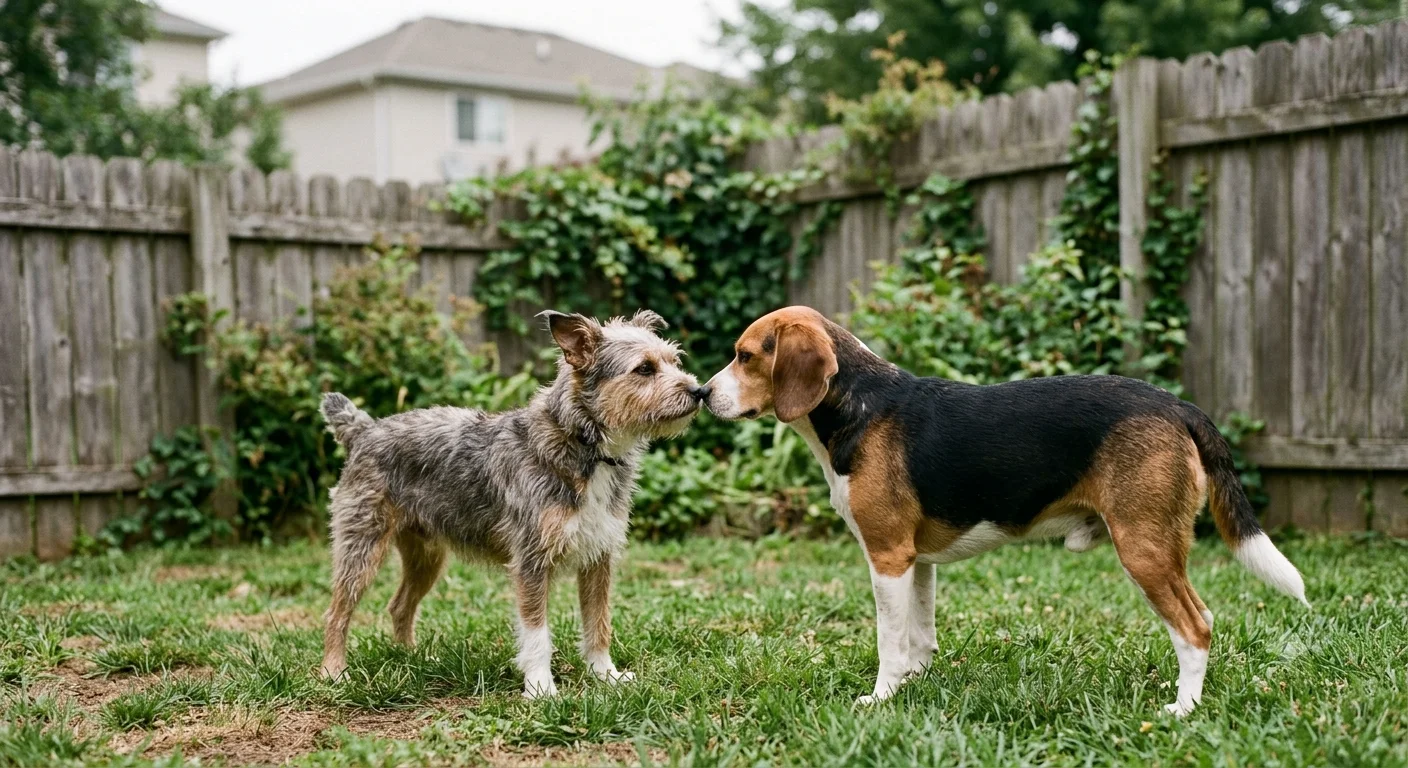
If your female dog is suddenly acting clingy, licking herself more than usual, or you've noticed spotting around the house, she's probably in heat. It's a normal part of life for an unspayed female dog — but "normal" doesn't mean simple, especially if this is new to you.
This guide covers the whole picture: what heat actually is, how often it happens, what the stages look like, and what you need to do differently while it's happening. If you're looking for something more specific — exact duration, first-heat expectations, pregnancy risk — we've linked out to a dedicated, deeper article for each of those so you're not wading through everything just to find one answer.
What Does It Mean When a Female Dog Is "In Heat"?
Being "in heat" (also called being "in season") refers to the fertile phase of a female dog's reproductive cycle, known clinically as the estrous cycle. It's driven by shifting levels of estrogen and progesterone, and it's the body's way of preparing for — and briefly allowing — pregnancy. Unlike humans, dogs don't have a monthly cycle; instead, most go through this cycle roughly twice a year.
The most noticeable signs are a swollen vulva and some vaginal discharge, which is why many owners describe it (understandably, but not quite accurately) as their dog having a "period." We get into exactly why that comparison doesn't hold up biologically in a dedicated article on dog periods vs. heat cycles — worth a read if you've been calling it that.
How Often Do Female Dogs Go Into Heat?
Most female dogs go into heat about every six months, though this varies quite a bit by size and breed. Smaller breeds often cycle more frequently — sometimes three to four times a year — while giant breeds like Great Danes or Bernese Mountain Dogs may only cycle once a year. A dog's first heat typically arrives somewhere between 6 and 15 months of age, with smaller breeds usually starting earlier and larger breeds later.
It's also common for a young dog's cycles to be irregular for the first year or two before settling into a consistent pattern. If your dog just had her first heat, our guide to a dog's first heat cycle walks through exactly what's normal at that stage.
The Four Stages of the Heat Cycle, at a Glance
Veterinary reproductive specialists divide the canine heat cycle into four distinct stages. Here's the short version of each:
| Stage | Typical duration | What's happening | What you'll notice |
|---|---|---|---|
| Proestrus | About 6–11 days | Estrogen rises, the body prepares for ovulation | Vulva swells; bloody discharge begins; males are interested but she's not yet receptive |
| Estrus | About 5–9 days (can range up to 3 weeks) | She becomes fertile and receptive to mating | Discharge often lightens in color; she may "flag" her tail to the side for males |
| Diestrus | Roughly 60–90 days | Progesterone dominates whether or not she's pregnant | She's no longer receptive; outward signs largely fade |
| Anestrus | About 4 months (varies) | A hormonal "reset" period between cycles | No heat-related signs at all — this is the resting phase |
For a full breakdown of what happens day by day — and why the total time in heat can vary so much from dog to dog — see our complete heat cycle timeline.
Signs Your Dog Is in Heat
The most common signs include:
- A visibly swollen vulva
- Blood-tinged or straw-colored discharge
- Increased urination, sometimes with more frequent marking
- Clinginess or restlessness
- Attracting male dogs from a distance
- "Flagging" — holding her tail to the side when touched near the rear
Some dogs also show mounting or humping behavior during this time, which is a normal (if sometimes awkward) part of the hormonal shift. For the full list of physical and behavioral signs — including which ones can look similar to something more serious — see our complete signs-of-heat checklist.
How Long Does a Dog Stay in Heat?
The visible part of the cycle — the bleeding and swelling most owners associate with "being in heat" — typically lasts about 14 to 21 days, though it can run shorter or longer depending on the dog. That's really the proestrus and estrus stages combined; the full hormonal cycle (including diestrus and anestrus) takes several months to complete before starting over. For exact day-by-day expectations, our heat cycle timeline article covers it in detail.
What to Do While Your Dog Is in Heat
A few practical adjustments make this period easier for both of you:
- Keep her on a leash during walks, even if she's normally reliable off-leash — male dogs can smell a female in heat from remarkable distances, and her own instincts will be working against her recall training.
- Watch the yard. A determined male dog will find a way in (or she'll find a way out) if there's any gap in a fence.
- Manage the mess with washable or disposable dog diapers if the discharge is heavier than you're comfortable with — we cover product options in our guide to managing a dog in heat.
- Avoid dog parks and group play for the duration of her heat, both for her comfort and to avoid unwanted attention from intact males.
Can My Dog Get Pregnant While in Heat?
Yes — and this is the single most important thing to understand during this period. A female dog is fertile during the estrus stage specifically, and even a brief unsupervised moment with an intact male can result in pregnancy. The timing and risk window are more specific (and less forgiving) than most owners assume. We break down exactly when conception risk is highest — and address the common myth that she's "safe" outside of heat — in our fertility and pregnancy risk guide.
When to Call the Vet
Most heat cycles are unremarkable from a health standpoint, but a few patterns are worth a call to your veterinarian:
- Heat lasting noticeably longer than three weeks
- Discharge that's heavy, foul-smelling, or greenish rather than blood-tinged
- Signs of pain, lethargy, or a swollen abdomen — particularly in the weeks after a heat cycle ends
- A dog who never seems to go into heat despite being the right age (sometimes called a "silent heat")
That second cluster of symptoms — appearing weeks after heat rather than during it — deserves special attention. It can be a sign of pyometra, a uterine infection that veterinary specialists at Cornell University and other veterinary teaching hospitals consider a medical emergency in unspayed female dogs. It's serious enough that we've dedicated a full article to it: Pyometra in Dogs: Signs, Causes & Why It's an Emergency. It's worth reading even if your dog seems perfectly healthy right now, simply so you know what to watch for later in life.
Long-Term: Do You Need to Deal With This Twice a Year Forever?
Not necessarily. Spaying permanently ends the heat cycle and removes the pregnancy and pyometra risk that comes with being intact. It's a personal and sometimes medical decision with its own timing considerations — our guide to spaying age and timing walks through how vets typically think about it.
Explore This Guide
This article is the starting point for everything related to female dog heat cycles on ItsWagging. Depending on where you are with your dog, these go deeper:
- Her First Heat: What to Expect — for first-time owners of a young female
- Signs Your Female Dog Is in Heat — the full symptom checklist
- How Long Do Dogs Stay in Heat? — the complete stage-by-stage timeline
- Managing a Dog in Heat — bleeding, mess, and diaper options
- When Can a Female Dog Get Pregnant? — fertility window and mating risk
- Do Dogs Have Periods? — clearing up the "period" vs. heat confusion
- When to Spay a Female Dog — timing and what to consider
- Pyometra in Dogs — the emergency every intact-female owner should recognize