Crate training done right isn't about confinement — it's about building a space your dog genuinely wants to be in, not one they're forced into. Done well, it helps with house training, gives your dog a secure place to settle, and makes travel, vet visits, and emergencies significantly less stressful. Done poorly (rushed, or used as punishment), it can create the exact anxiety it's meant to prevent.
Is crate training actually good for dogs?
Dogs are naturally drawn to den-like spaces — a properly introduced crate taps into that instinct rather than working against it. The key word is properly introduced: a crate should never be used as punishment, and a dog should never be crated for excessively long stretches. Used correctly, most trainers and behaviorists consider it a genuinely useful tool, not a necessary evil.
When to start
You can start crate training as early as 8 weeks old, as soon as a puppy comes home — earlier is generally easier since there's no existing negative association to undo. That said, adult dogs and rescues can absolutely be crate trained too; it just tends to take a bit more patience, especially if they have any history with a crate being used negatively.
Step-by-step: introducing the crate
Step 1: Make the crate a good place, before asking for anything
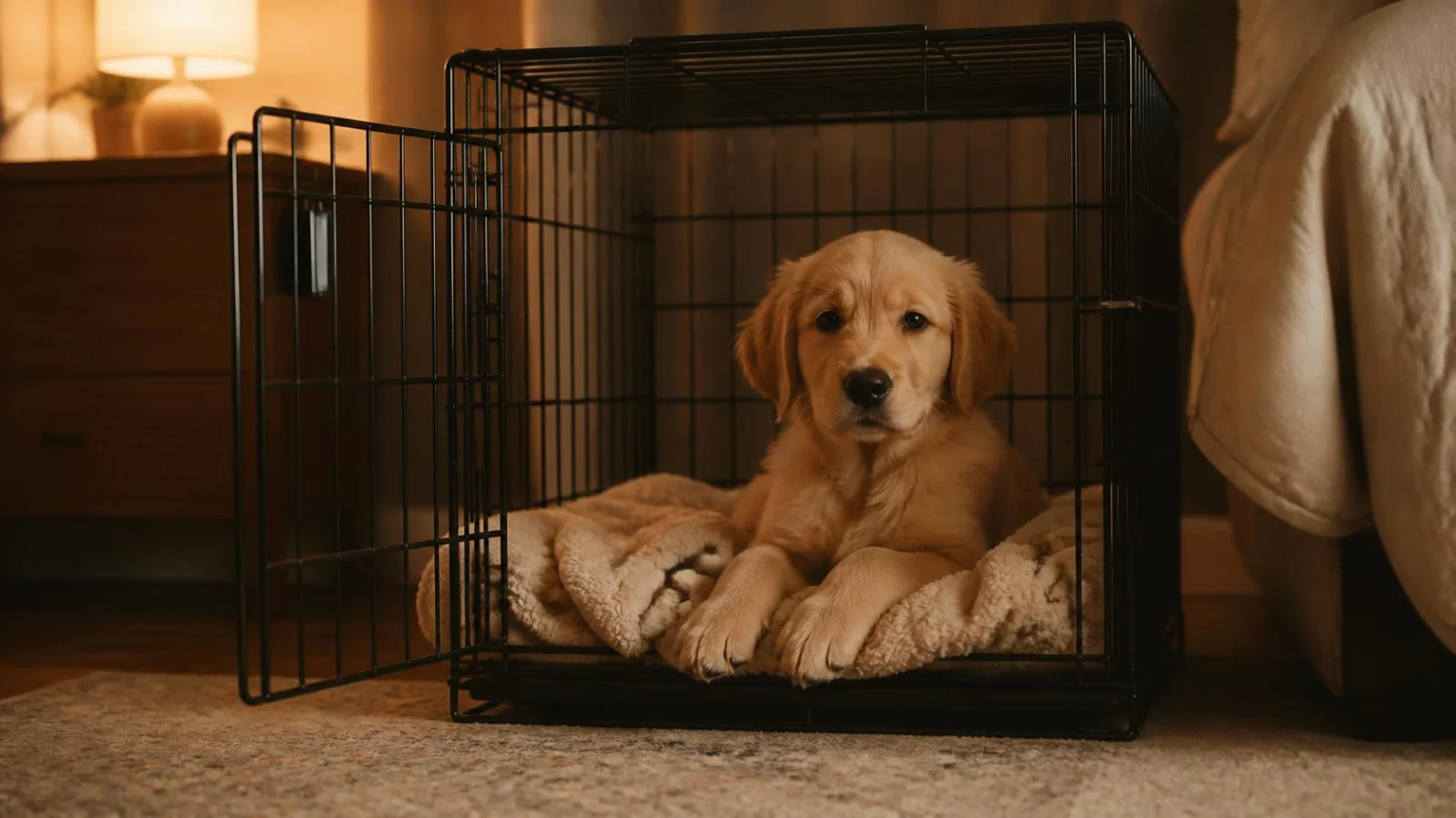
Leave the crate open in a common area with a comfortable bed inside. Toss treats near and inside it, feed meals near the entrance (gradually moving the bowl further in over several days), and let your dog investigate entirely on their own terms. No pressure, no closing the door yet.
Step 2: Add short, positive door-closed sessions
Once your dog is voluntarily going in and relaxing, close the door for a few seconds while they're calm, then open it before they show any sign of distress. Gradually extend the time — seconds, then a minute, then several minutes — always ending the session while your dog is still calm, not after they've started whining.
Step 3: Build up to real duration
Slowly extend crate time while you're present in the room, doing normal activities. Once your dog can settle for 20-30 minutes with you nearby, start stepping out of the room briefly, then returning — building toward you being able to leave the house.
Step 4: Practice real departures
Start with genuinely short absences (a few minutes), gradually working up. This mirrors the approach we cover in more depth in our separation anxiety guide — crate training and departure anxiety are closely linked, and rushing this step is the most common reason crate training doesn't stick.
A sample first-week schedule
| Day | Focus |
|---|---|
| Days 1-2 | Door open, feeding near/inside crate, no closed door yet |
| Days 3-4 | Short closed-door sessions (seconds to 2 minutes), you nearby |
| Days 5-6 | Extend to 10-20 minutes, try leaving the room briefly |
| Day 7+ | Short real departures (5-10 minutes), gradually increasing |
This is a rough guide, not a strict rule — some dogs move faster, some need more time at each stage. The important principle is always progressing from a calm state, not a distressed one.
Handling nighttime crying
This is one of the most common crate training struggles, especially with puppies in a new home. A few things that genuinely help:
- Placement — keeping the crate in or near your bedroom for the first weeks (rather than an isolated room) often reduces crying significantly, since puppies are highly distressed by sudden isolation from their new family
- Last bathroom break right before bed — reduces the odds that crying is a genuine potty need rather than just settling-in distress
- Don't rush to let them out the second they cry — wait for a brief pause in the crying before opening the door, so you're not directly reinforcing crying as the way to get released. But also don't ignore genuinely escalating distress for excessive periods, especially in very young puppies
- A safe, appropriately-sized chew or comfort item can help some dogs self-soothe — avoid anything that could be a choking risk unsupervised overnight
Nighttime crying typically improves significantly within the first 1-2 weeks as your dog builds confidence in the new routine — persistent, unchanging distress well beyond that point is worth mentioning to a trainer or vet.
Crate training an adult or rescue dog
The core process is the same, but expect it to take longer, especially if your dog has any negative crate history or general anxiety from a shelter environment. Move through each step more slowly, watch closely for stress signals (panting, drooling, frantic escape attempts) rather than following a fixed timeline, and be prepared for this to take weeks rather than days. Patience matters more than speed here.
Common mistakes that undo progress
- Using the crate as punishment — this teaches your dog to fear it, undoing everything positive association you've built
- Moving too fast — extending duration before your dog is genuinely comfortable at the current stage
- Crating for excessively long stretches, especially with puppies who have real physical bladder/bowel limits
- Letting a dog out specifically because they're crying (rather than waiting for a calm moment) — this can accidentally train the exact behavior you're trying to avoid
What size and type of crate actually matters here
The training process works best with the right equipment behind it — sizing and crate type genuinely affect how quickly a dog settles in. We cover exactly how to choose in our complete crate buying guide, including sizing charts and what actually matters for anxious or destructive dogs specifically.