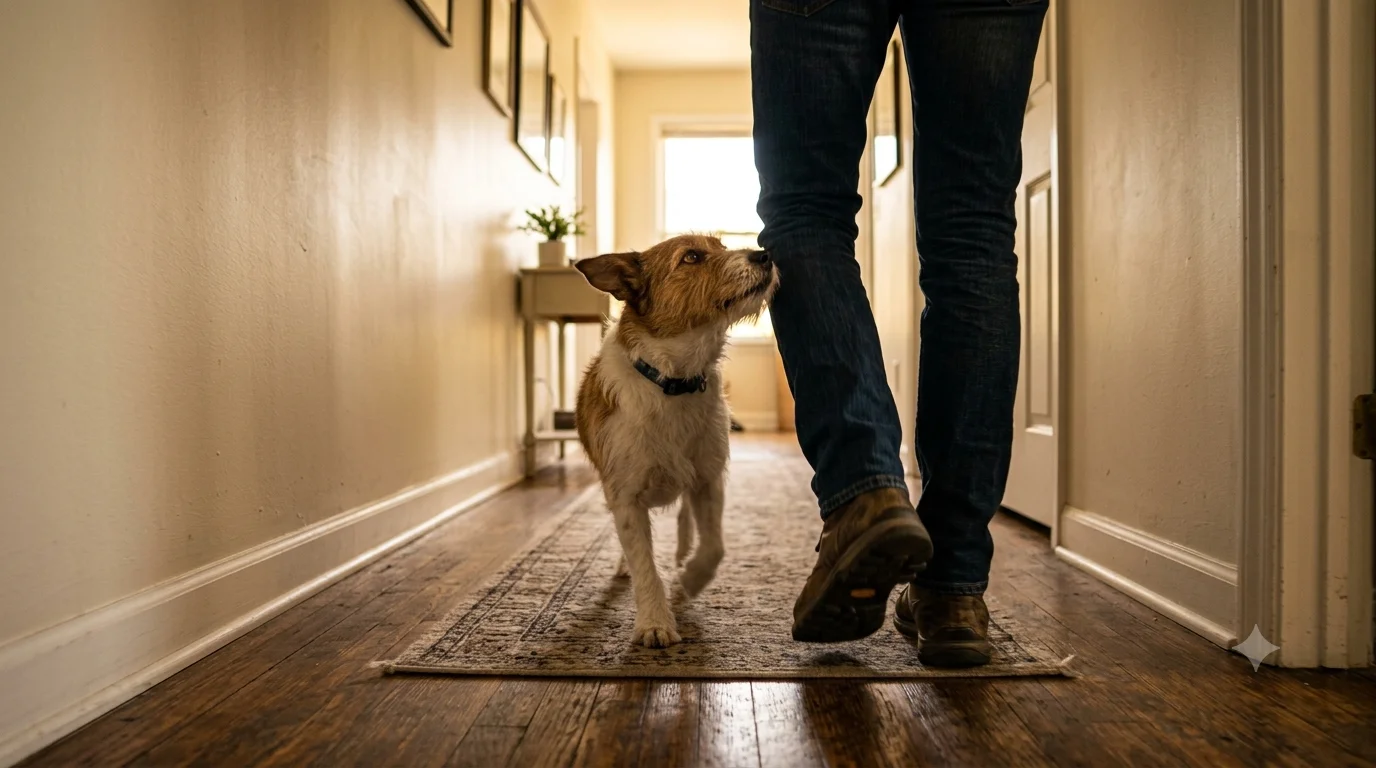
If your normally independent dog has suddenly turned into your shadow — following you room to room, whining when you're out of sight, unable to settle unless they're touching you — something has genuinely shifted, even if it's not obvious what.
Common reasons for sudden clinginess
A change in routine or environment
A move, a new pet or family member, a change in your work schedule, or even rearranged furniture can all unsettle a dog enough to trigger increased clinginess as they seek reassurance.
Aging and cognitive changes
Older dogs can become more clingy as part of normal aging, and in some cases this is linked to canine cognitive dysfunction (similar to dementia), where increased disorientation leads to seeking more reassurance from you specifically.
Underlying pain or illness
Dogs in pain or feeling unwell sometimes seek more closeness rather than less — clinginess can occasionally be one of the more subtle signs that something physical is going on, especially if it's paired with any other behavior change.
Past a stressful event
A vet visit, grooming appointment, loud event (see our thunder and fireworks guide), or any recent scare can lead to a temporary clingy phase as your dog seeks extra security.
Separation anxiety developing or worsening
Clinginess while you're home can sometimes be an early sign of broader separation-related anxiety — worth a look at our separation anxiety guide if this seems connected to how your dog handles you actually leaving.
Is clingy behavior actually a problem?
Not inherently — many dogs are naturally more attached to their people than others, and that's not something to "fix." It's worth paying closer attention when the change is sudden, paired with other symptoms, or is genuinely interfering with your dog's (or your) daily life.
When to see a vet
- Sudden clinginess with no clear trigger, especially in an older dog
- Clinginess paired with appetite changes, lethargy, or other physical symptoms
- Signs of disorientation or confusion alongside the behavior change (more common in senior dogs)
What can help
- Maintain a predictable daily routine, which is genuinely reassuring for most dogs
- Avoid reinforcing clinginess with excessive attention every single time it happens, while still meeting genuine needs
- Gradual independence exercises (similar to those used for separation anxiety) can help if the clinginess is anxiety-driven
- Rule out physical causes first if the change was sudden and unexplained